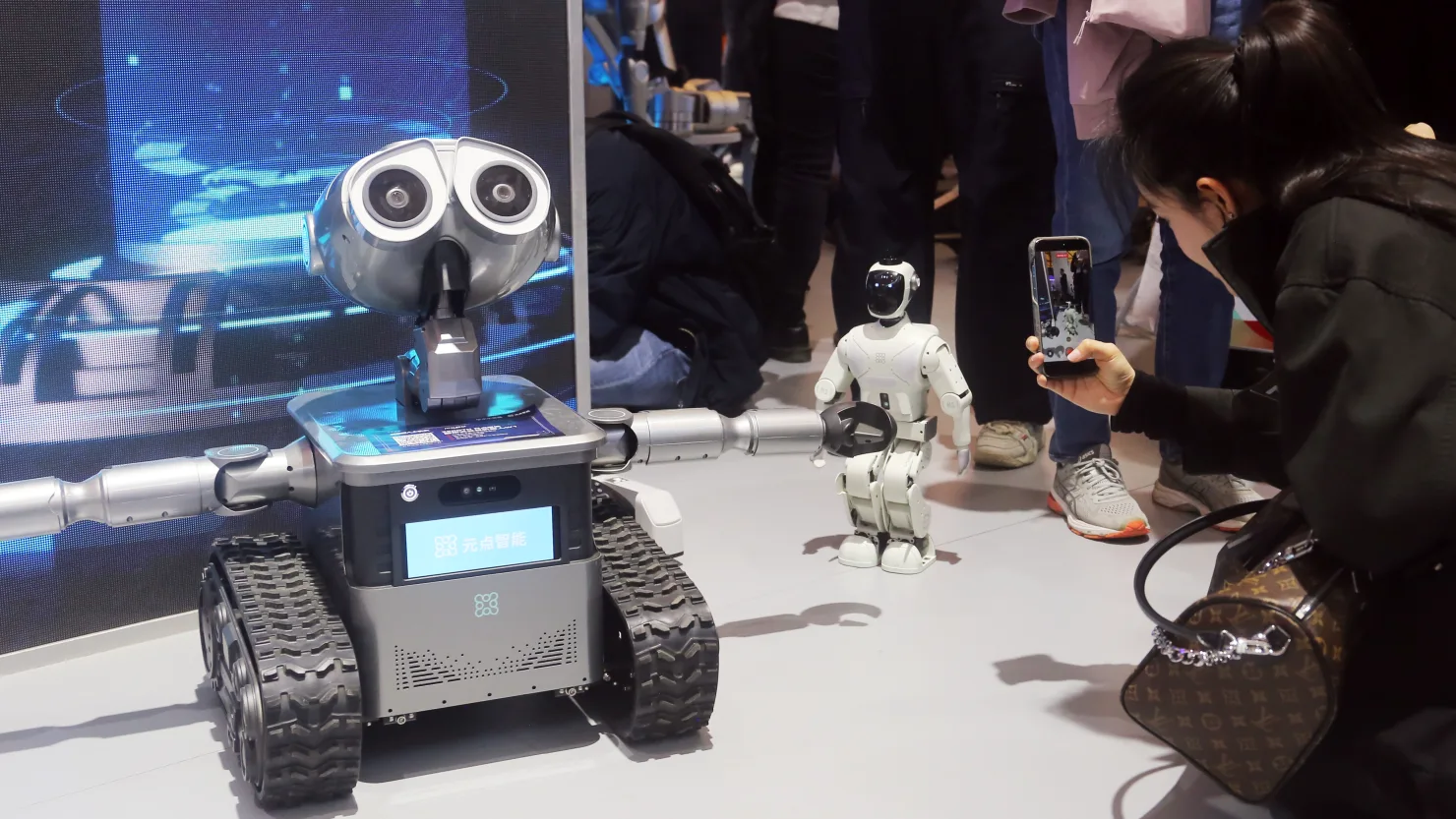
Twelve Deals in Eighteen Months: Why Ant Group Is Buying Into the Robot Future
Alibaba affiliate Ant Group has quietly become one of the most aggressive investors in humanoid robotics, with a dozen deals since early 2025. The fintech giant's strategy says a lot about where China thinks embodied AI is going.
When Ant Group led a $74 million round in home-robot maker Zeroth this month, it was the Alibaba affiliate's twelfth humanoid robotics investment in eighteen months. For a company the world still files under "fintech," that is not dabbling. It is a thesis.
The portfolio logic
Ant's robotics bets span the stack: manipulation startups, home companion robots, component makers and embodied-AI software layers. The Zeroth deal is instructive — the startup claims 30,000 orders and 600 percent revenue growth selling robots for early childhood education, smart homes and pet companionship, with expansion to North America and Europe planned for the fall.
That is not the industrial humanoid story that dominates Western coverage. Ant is betting on the consumer household as the beachhead market — lower reliability requirements than a factory floor, higher tolerance for novelty, and a natural fit with the super-app distribution and payments rails Ant already owns.
Why a payments giant wants robots
Three readings, not mutually exclusive. First, diversification under regulatory constraint: since the shelved IPO and restructuring, Ant has needed growth stories outside consumer credit, and Beijing's five-year plan has made embodied AI a favored destination for exactly this kind of capital redeployment. Second, ecosystem defense: if home robots become an interface for commerce and services, whoever owns the robot owns the transaction. Third, data: household robots generate the manipulation and environment data that every embodied-AI lab is starving for.
The pattern to watch
Ant is not alone — Meituan and Tencent just minted smart-glasses unicorn Even Realities, and Geely Capital appears in both the Zeroth and Tripo AI rounds. China's platform giants are doing with physical AI what they did with mobile payments a decade ago: seeding an entire supply chain at once, accepting that most bets die, and counting on distribution to make the winners enormous.
The contrast with the US is sharp. American humanoid capital is concentrating in a few heavily funded manufacturers now heading to public markets. Chinese platform capital is spraying across dozens of consumer-facing applications. If the household — not the warehouse — turns out to be where embodied AI first scales, the map of that market is being drawn in Hangzhou, not Fremont.
Newsletter
Get Lanceum in your inbox
Weekly insights on AI and technology in Asia.
More in Analysis
All Three Majors Are Now Suing Anthropic. The AI Copyright Endgame Is Taking Shape

The Backlash Has Arrived: Asia's Data Center Boom Is Colliding With the People Who Live Next Door