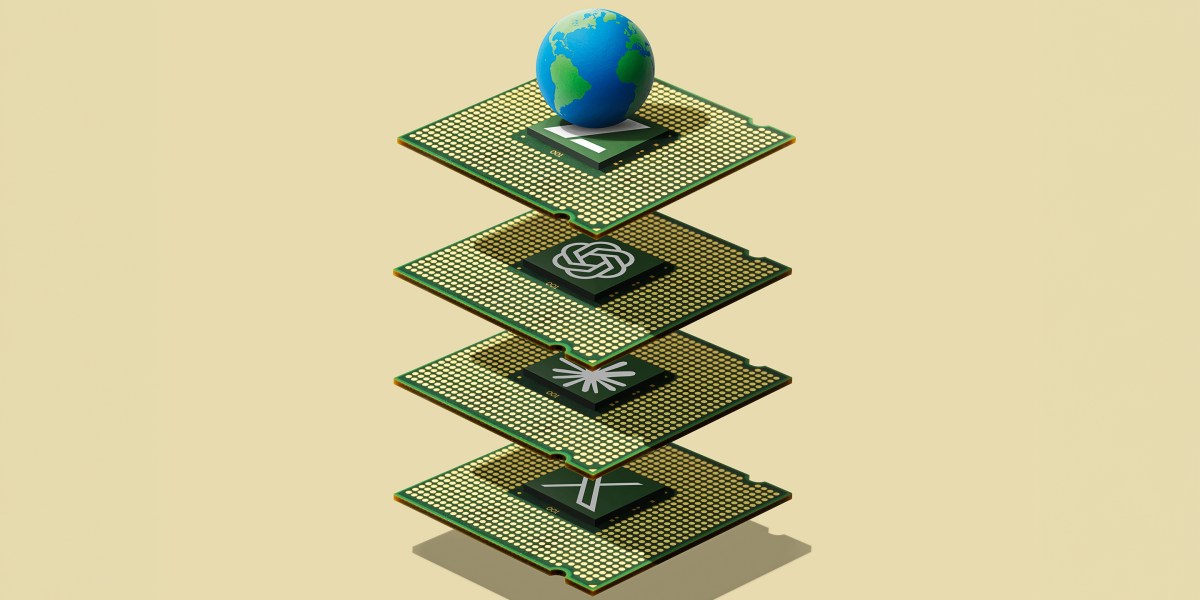
The Cost War: How Moonshot, Z.ai and DeepSeek Are Beating US Labs on Price — and Why It Works
Chinese frontier labs now ship models within striking distance of the US frontier at a tenth of the price. The strategy isn't charity — it's a deliberate play for the world's developer mindshare, and it's winning.
Set the benchmarks aside for a moment and look at the price lists. OpenAI's new GPT-6 Astra costs $10 per million input tokens; Anthropic's Fable 5.1 the same. Z.ai's GLM-5.3-Flash — an open-weight, natively multimodal model with a million-token context window — costs $0.15. That is not a discount. It is a different business model, and it is reshaping who builds on what across the Global South and increasingly inside Western enterprises too.
The playbook
As Fortune documented this summer, Moonshot, Z.ai, and DeepSeek are challenging US labs while systematically undercutting them on cost. The playbook has three moves:
Open weights as distribution. Kimi K3 (2.8 trillion parameters), the GLM-5 line, and DeepSeek's V4 all ship under permissive licenses. Every startup that self-hosts a Chinese model becomes a node in that lab's ecosystem — no sales team required. Saudi Arabia's HUMAIN building its national Arabic model on MiniMax's M3 is the strategy working at nation-state scale.
Architectural frugality. The cost advantage is not only cheap labor or subsidized compute. Sparse mixture-of-experts designs with tiny active-parameter counts (GLM-5.3-Flash activates 18B of 320B), hybrid attention that slashes KV-cache memory, and aggressive distillation mean these models genuinely cost less to serve.
Volume over margin. Chinese labs price near marginal cost to occupy the default slot in coding agents, RAG stacks, and inference platforms like OpenRouter — where Chinese models have repeatedly topped usage charts. Mindshare now, monetization later.
Why US labs can't simply match it
OpenAI and Anthropic carry costs their Chinese rivals don't: enormous safety and alignment organizations, compute contracts priced at Western rates, and investor expectations built on premium API margins. Their moat is the frontier itself — Astra's Critical-rated cyber capabilities, Fable's 11-day autonomous formalization of Fermat's Last Theorem. As long as the hardest tasks demand the best model, the premium holds.
But the frontier premium covers a shrinking share of workloads. Most production AI is summarization, extraction, routine coding, support — tasks where a 90-percent-as-good model at 3 percent of the price wins every procurement review.
The uncomfortable equilibrium
The likely end state is a barbell: US labs own the high end and regulated industries; Chinese open weights own the volume. That is roughly how telecom equipment, solar, and batteries played out — sectors where Chinese cost engineering eventually moved upmarket too. Washington's export controls target the compute inputs, but the cost war is being fought in software economics, where controls have no purchase. The US answer, if there is one, will have to be its own cheap tier — not just a better frontier.
Newsletter
Get Lanceum in your inbox
Weekly insights on AI and technology in Asia.
More in Analysis
All Three Majors Are Now Suing Anthropic. The AI Copyright Endgame Is Taking Shape
The Backlash Has Arrived: Asia's Data Center Boom Is Colliding With the People Who Live Next Door