Why CPUs Are Suddenly at the Center of the AI Race
GPUs get the headlines, but the humble CPU has become a strategic battleground — and Chinese players see it as their best opening to claw back market share.
For three years, the AI story has been told in GPUs: who has them, who can't get them, and what Nvidia will charge for the next generation. But as Nikkei Asia reported this week, the global AI boom is quietly reshaping a different battleground — the CPU — and the fight over it says a great deal about where the AI hardware market goes next.
The Forgotten Chip Gets Interesting Again
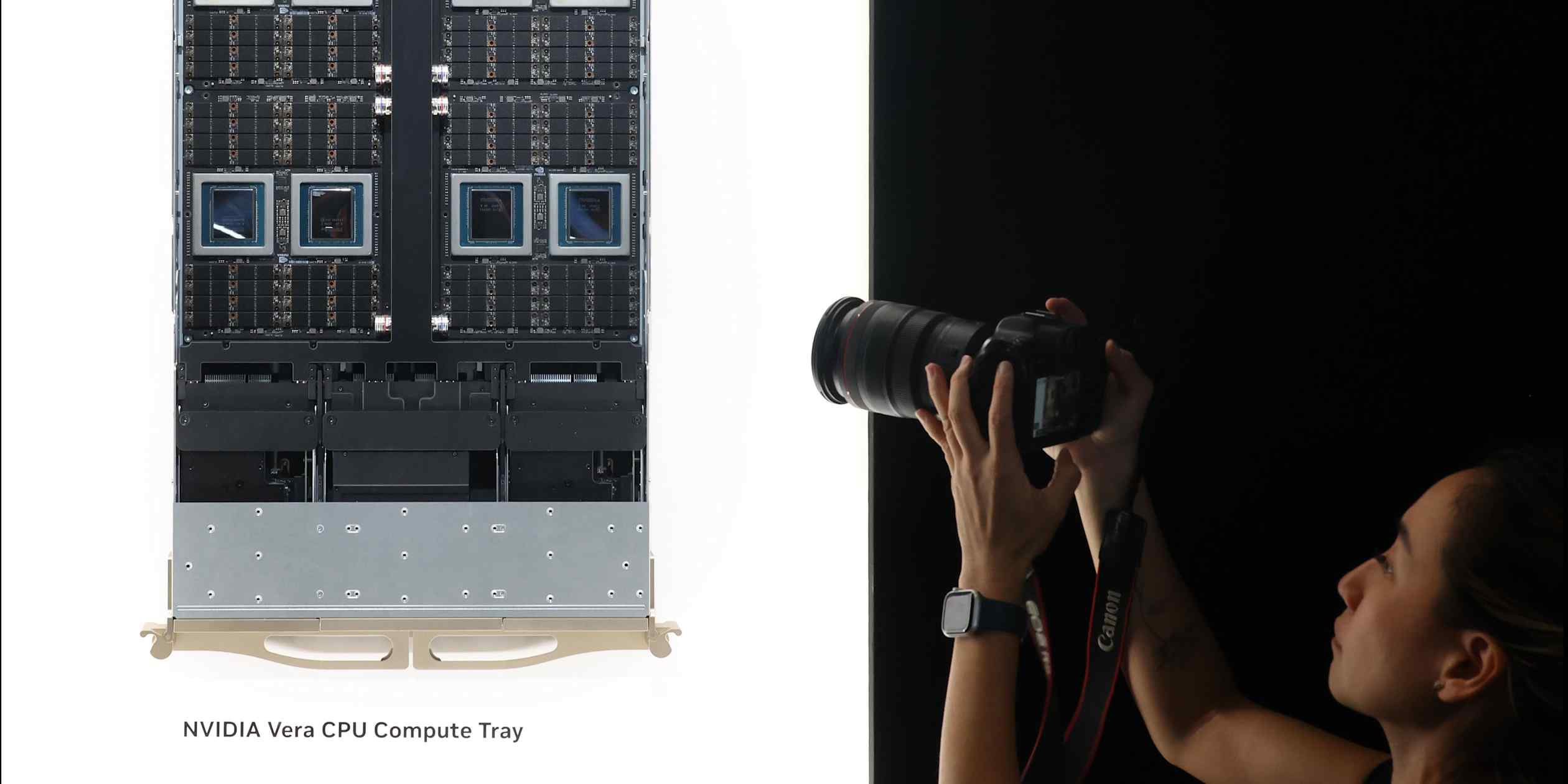
Every AI server needs CPUs, and next-generation AI racks need far more capable ones. In Nvidia's Vera Rubin platform, the company's own Arm-based Vera CPU sits beside every pair of Rubin GPUs, orchestrating data movement, preprocessing and the growing volume of agentic workloads that don't map neatly onto GPU cores. Inference at scale, it turns out, is as much a CPU problem as a GPU one: token routing, retrieval, tool calls and orchestration logic all run on general-purpose cores.
That has turned the CPU socket into strategic territory. US chipmakers lead today — AMD's EPYC has taken record server share from Intel, and Nvidia is increasingly bundling its own CPUs into full-rack systems, squeezing both. Arm's data center ambitions, backed by SoftBank, have never looked stronger.
China's Opening
The most consequential dynamic, though, is in China. Cut off from the most advanced US accelerators by export controls, Chinese players see the CPU as the layer where domestic substitution is actually achievable. Local champions — from Loongson's homegrown architecture to Arm-based designs from Huawei's HiSilicon and RISC-V efforts backed by Alibaba's Damo Academy — are targeting the wave of domestic data center construction that Beijing's "AI Plus" strategy guarantees.
The logic is straightforward: China may not be able to match Nvidia's GPUs this decade, but a competitive server CPU is within reach, and every domestic AI rack that pairs a Chinese CPU with a Chinese accelerator is a rack that generates no US revenue at all. Cambricon's trillion-yuan valuation and the rise of domestic GPU vendors like Iluvatar CoreX make the pairing increasingly plausible.
The RISC-V Wild Card
Threading through all of this is RISC-V, the open instruction set that no government can embargo. Tenstorrent — whose CEO Jim Keller just batted down acquisition rumors from Qualcomm — packs 768 RISC-V cores into each of its Galaxy Blackhole systems, and Qualcomm has been assembling RISC-V assets through acquisitions. For Chinese designers, RISC-V offers an architecture immune to the licensing risks that shadow Arm; for Western startups, it offers freedom from x86 economics. Both sides are betting on the same standard for opposite reasons.
What to Watch
The CPU fight will not produce a single winner. But it will determine the margins structure of AI infrastructure — whether hyperscalers keep paying Nvidia for vertically integrated racks or break the bundle with their own silicon — and it will be an early indicator of how far China's domestic substitution can actually go. The GPU race made the AI boom. The CPU race will decide who keeps the profits.
Newsletter
Get Lanceum in your inbox
Weekly insights on AI and technology in Asia.