The Distillation Wars: Why 'Model Theft' Is the New Front in the US-China AI Fight
The White House's accusation against Moonshot marks a shift — from restricting chips to policing knowledge itself. But behavioral forensics can't deliver courtroom proof, and the open-weight era makes enforcement a nightmare.
For four years, America's AI containment strategy had a physical shape: export controls on chips. You could count the H100s, inspect the shipping manifests, sanction the shell companies. This week, with the White House's extraordinary public accusation that Moonshot AI distilled Anthropic's Fable to build Kimi K3, the strategy crossed into far murkier territory — policing the flow of knowledge itself.
From atoms to tokens
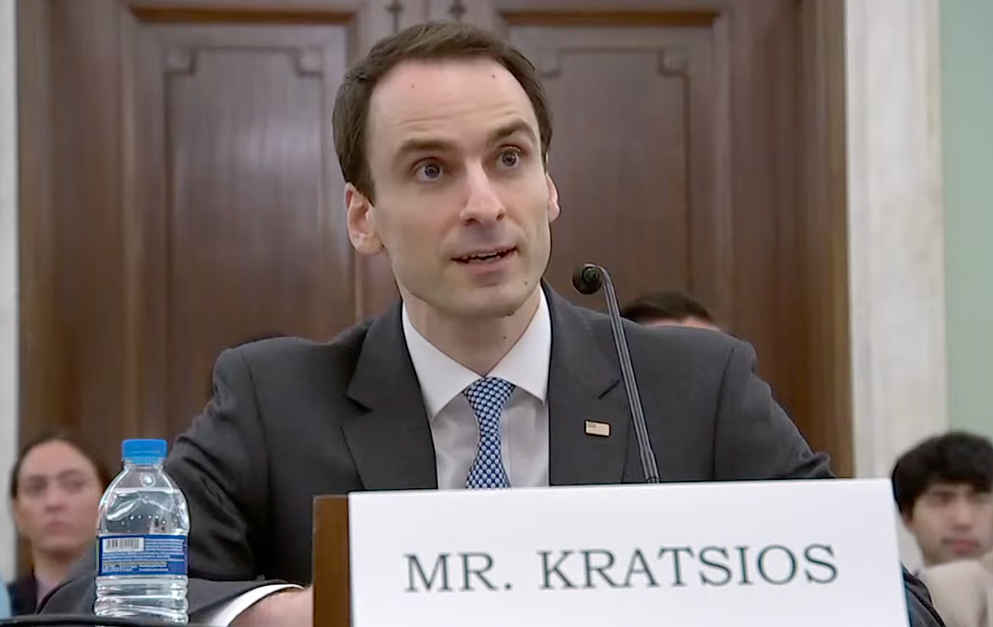
Distillation is not exotic. Every major lab, American and Chinese, trains smaller models on the outputs of larger ones; it is how flash-tier models get frontier-adjacent quality at commodity prices. What OSTP director Michael Kratsios alleged is categorically different: a "sophisticated internal platform" for large-scale, covert harvesting of a competitor's outputs — 16 million fake-account interactions, by Anthropic's count — laundered through rotating access methods to avoid detection.
The problem is that the offense, if it happened, leaves no physical evidence. Model weights carry no watermarks that survive training. The government's case rests on behavioral forensics — statistical fingerprints in how K3 responds — and on Anthropic's telemetry of suspicious API traffic. Both are suggestive. Neither is proof in the sense that a seized shipment of GB300s is proof, which is why the administration paired the distillation claim with a more traditional and more falsifiable allegation: banned Nvidia hardware accessed through Thailand.
Why now, and why Moonshot
The timing is not subtle. Kimi K3 is the most successful Chinese model launch since DeepSeek's R1 moment — it topped US models on public leaderboards, crashed its own subscription infrastructure under demand, and ships open weights on July 27. Once those weights are on Hugging Face, they are unrecallable. If Washington wanted to attach an asterisk of contested provenance to K3 before every enterprise in the world could download it, this was the last week to do it.
There is also an Anthropic-shaped subtext. This is the second US accusation this year of Chinese labs distilling Anthropic's models, after earlier claims against Alibaba. Anthropic did not initiate the public fight, but it benefits twice over: government validation that Fable is the model worth stealing, delivered months before an expected October IPO. The company's own report of industrial-scale fake-account harvesting supplied the evidentiary spine of the government's case — a new kind of public-private intelligence fusion the industry has yet to reckon with.
The skeptics have a point — and it doesn't settle anything
The technical pushback gathering in Asia and among Western researchers centers on timelines: Fable went public July 1, K3 launched July 15, and nobody trains a 2.8-trillion-parameter frontier model in a fortnight. That argument lands against the strongest version of the claim — "K3 is a distilled copy of Fable" — but glances off the weaker, more plausible one: that harvested outputs from multiple US models, collected over months, seasoned K3's post-training. Distillation is not binary, and that is precisely what makes it ungovernable. A model can be 2 percent distilled, and no benchmark will tell you which 2 percent.
Expect three consequences. First, know-your-customer requirements for model APIs and compute rental, long discussed, now have their casus belli. Second, enterprise legal departments just inherited a new diligence question — "can you attest to the provenance of the open-weight models in your stack?" — that will chill adoption of Chinese models in regulated industries regardless of the accusation's merits, which may be the entire point. Third, the practice itself will not stop. Output harvesting is cheap, deniable and effective, and both sides of the Pacific know every lab's terms of service are enforced by the honor system.
The chip war had chokepoints. The knowledge war has none — only accusations, forensics and the slow erosion of the open ecosystem that made this industry move so fast in the first place. That erosion, not any sanction, may prove the accusation's most lasting effect.
Newsletter
Get Lanceum in your inbox
Weekly insights on AI and technology in Asia.