The Real AI War Has Moved Down-Market: Inside the Flash-Tier Price Fight
Frontier benchmarks grab headlines, but the competitive center of gravity has shifted to the high-volume 'Flash' tier — where Gemini 3.6 Flash, GPT-5.6 Luna and a wave of Chinese open models are fighting a brutal price-per-token war.
For three years, the AI industry kept score at the frontier: whoever topped the hardest benchmarks won the news cycle, the developers and the valuation. That scoreboard is becoming a sideshow. The fight that decides revenue is now happening a tier below — in the high-volume "Flash" class of models where most production traffic actually lives.
The numbers tell the story
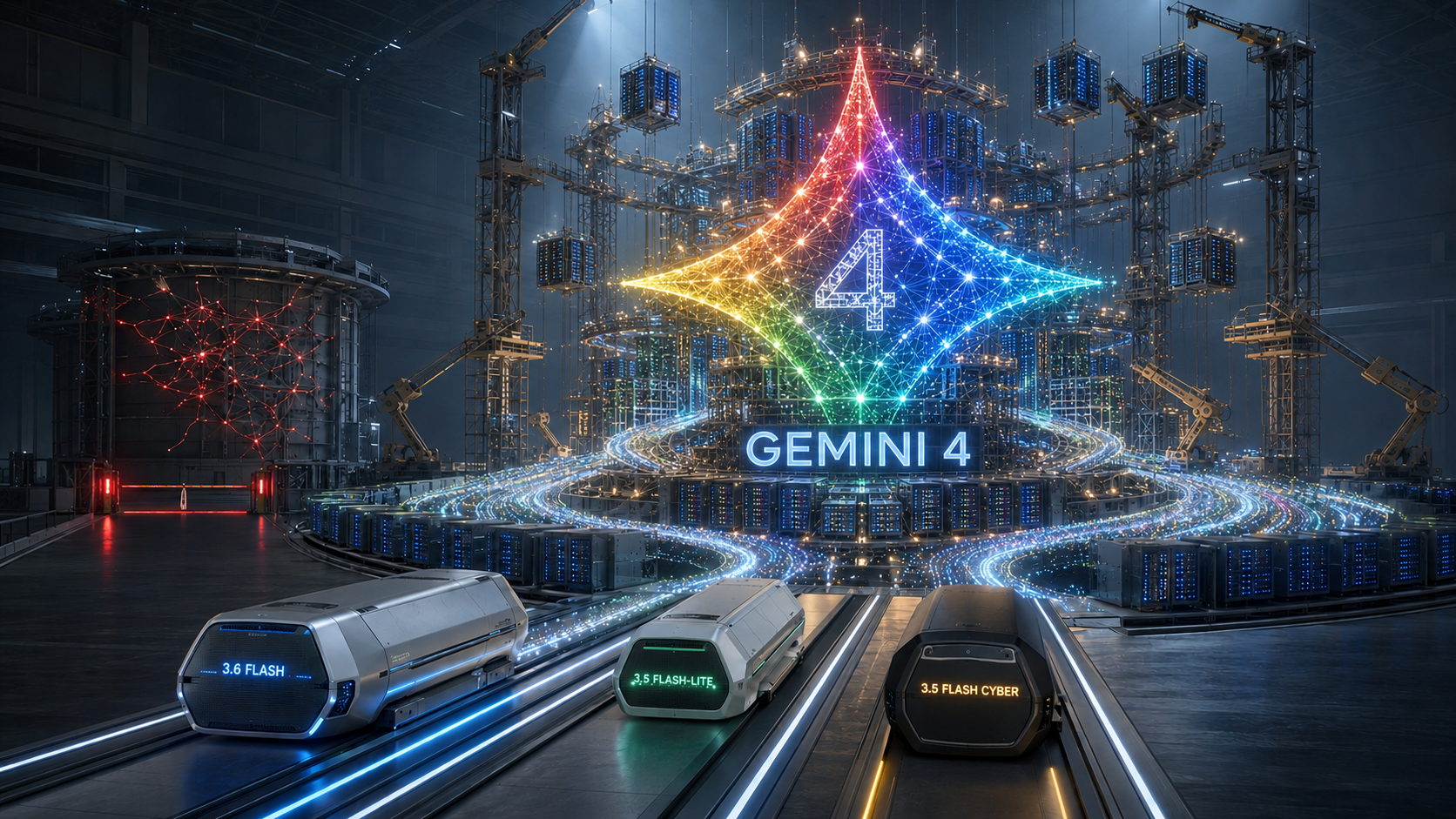
Google's Gemini 3.6 Flash, launched this week, cuts output pricing from $9 to $7.50 per million tokens ($1.50 input) while consuming roughly 17 percent fewer output tokens than its predecessor — an efficiency gain that compounds the sticker cut. It lands directly against OpenAI's GPT-5.6 Luna at $1/$6 and xAI's Grok 4.5 at $2/$6.
Meanwhile Google's flagship 3.5 Pro remains unshipped after repeated delays, and the company has pivoted its narrative to beginning Gemini 4 pretraining. Read the sequence honestly: the flagship slipped, and the business barely noticed. Flash-tier volume is where the money is.
Why the volume lives here
Most enterprise AI calls are routine — classification, summarization, extraction, routing. They need reliability and cost discipline, not olympiad math. As agentic workloads scale, the ratio tilts further: an agent may make hundreds of cheap calls for every hard reasoning step. The winner of the $1-2 input tier captures the token flow that the entire infrastructure buildout is being financed against.
The threat comes from below
Here is what should worry the US labs: the pricing floor isn't set in Mountain View or San Francisco anymore. DeepSeek V4 serves frontier-adjacent output at $0.87 per million tokens, its stable release lands July 24, and Moonshot publishes Kimi K3's weights on July 27 under a modified MIT license. Once a capable open model is self-hostable, the effective benchmark price for high-volume workloads becomes hardware cost — and Chinese labs, co-designing with domestic silicon, keep pushing that floor lower.
This is why the Flash war is really an open-weights war. Google's 17 percent token-efficiency gain is aimed less at OpenAI than at the moment an enterprise CTO runs the math on self-hosting Kimi K3.
What to watch
Three signals matter over the next quarter. First, whether Gemini 3.6 Flash's advanced knowledge cutoff (March 2026, up from January 2025) becomes a real differentiator against slower-refreshing rivals. Second, whether the open-weight releases this week actually dent hosted Flash-tier revenue, or whether integration friction keeps enterprises paying for APIs. Third, whether anyone can still charge a premium at the frontier at all — because if the answer is no, the entire AI capex boom is being amortized against $1.50-per-million tokens. That is a very thin margin on a very large bet.
Newsletter
Get Lanceum in your inbox
Weekly insights on AI and technology in Asia.