ASML to Expand Japan Workforce 40% as Rapidus and TSMC Scale Advanced Production
The Dutch lithography monopolist will grow its Japanese staff from 500 to about 700 by 2030, deepening its Hokkaido presence to support Rapidus's 2nm push — a quiet vote of confidence in Japan's chip revival.
ASML plans to expand its Japan workforce by roughly 40 percent — from 500 to about 700 people by 2030 — as next-generation chipmakers Rapidus and TSMC ramp advanced production in the country, Nikkei reported.
Following the fabs
The Dutch company, whose extreme ultraviolet (EUV) lithography machines are the only tools capable of printing leading-edge chips, opened an office in Hokkaido in 2024 to support Rapidus, the state-backed foundry venture targeting 2-nanometer production in 2027. TSMC, meanwhile, continues to expand in Kumamoto, where its joint-venture fabs anchor a growing southern Japan chip cluster.
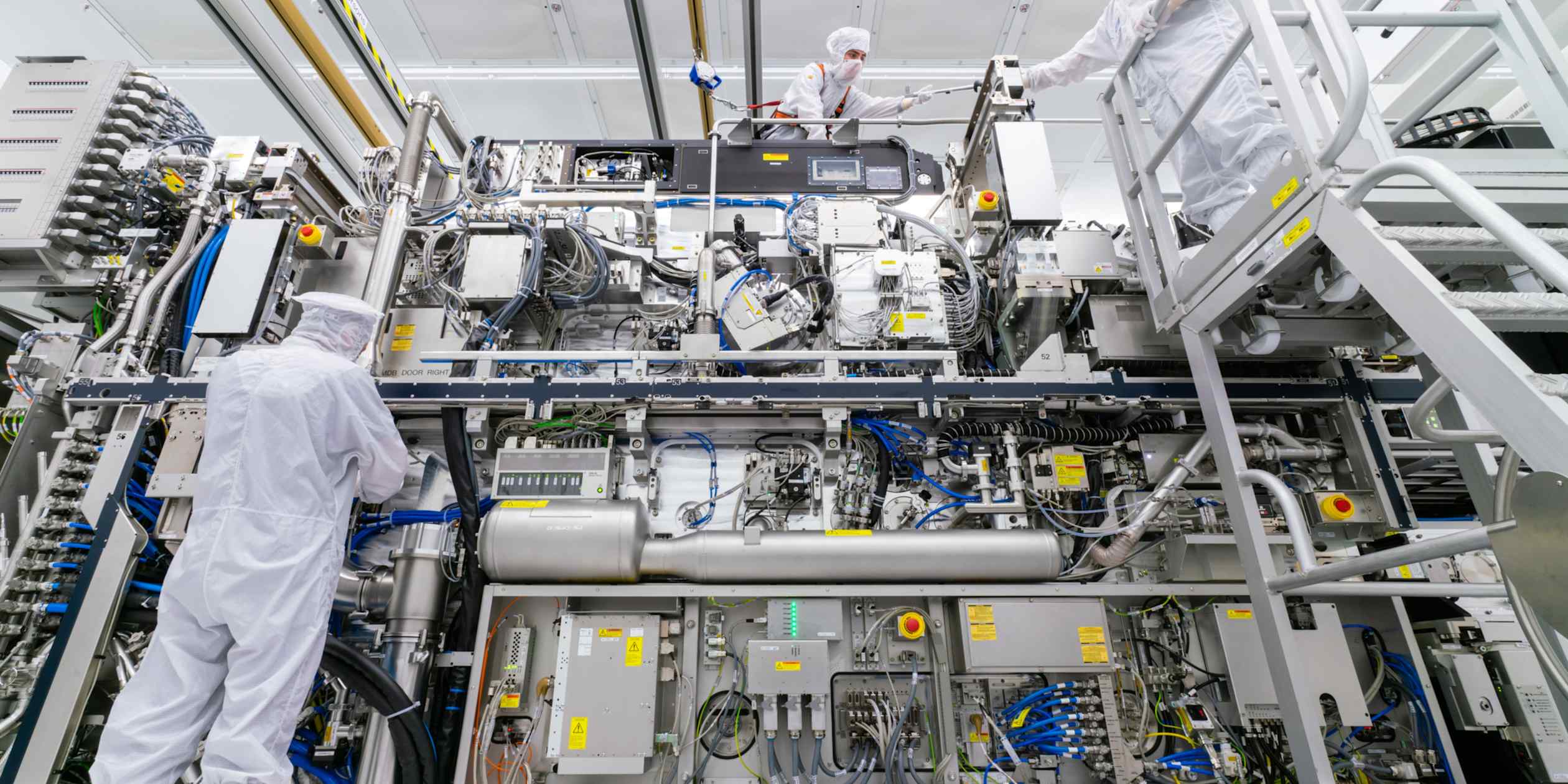
EUV machines require permanent on-site field engineering teams — each tool is a bus-sized instrument needing constant calibration — so ASML headcount is one of the most reliable leading indicators of where advanced chipmaking is actually happening, as opposed to where it is merely announced.
The bigger picture
The expansion slots into a remarkable run of Japanese chip and AI infrastructure news: a $60 billion AI data center buildout targeting 4.9 GW by 2033, Kioxia's high-bandwidth flash push into the AI memory hierarchy, and Ajinomoto and Daikin deepening chip-materials ties with Taiwan. Two decades after ceding leading-edge logic to Taiwan and Korea, Japan is methodically reassembling every layer of the stack — tools, materials, memory, foundry and now the compute demand to justify it. ASML hiring locally is the industry's way of saying it believes the revival is real.
Newsletter
Get Lanceum in your inbox
Weekly insights on AI and technology in Asia.