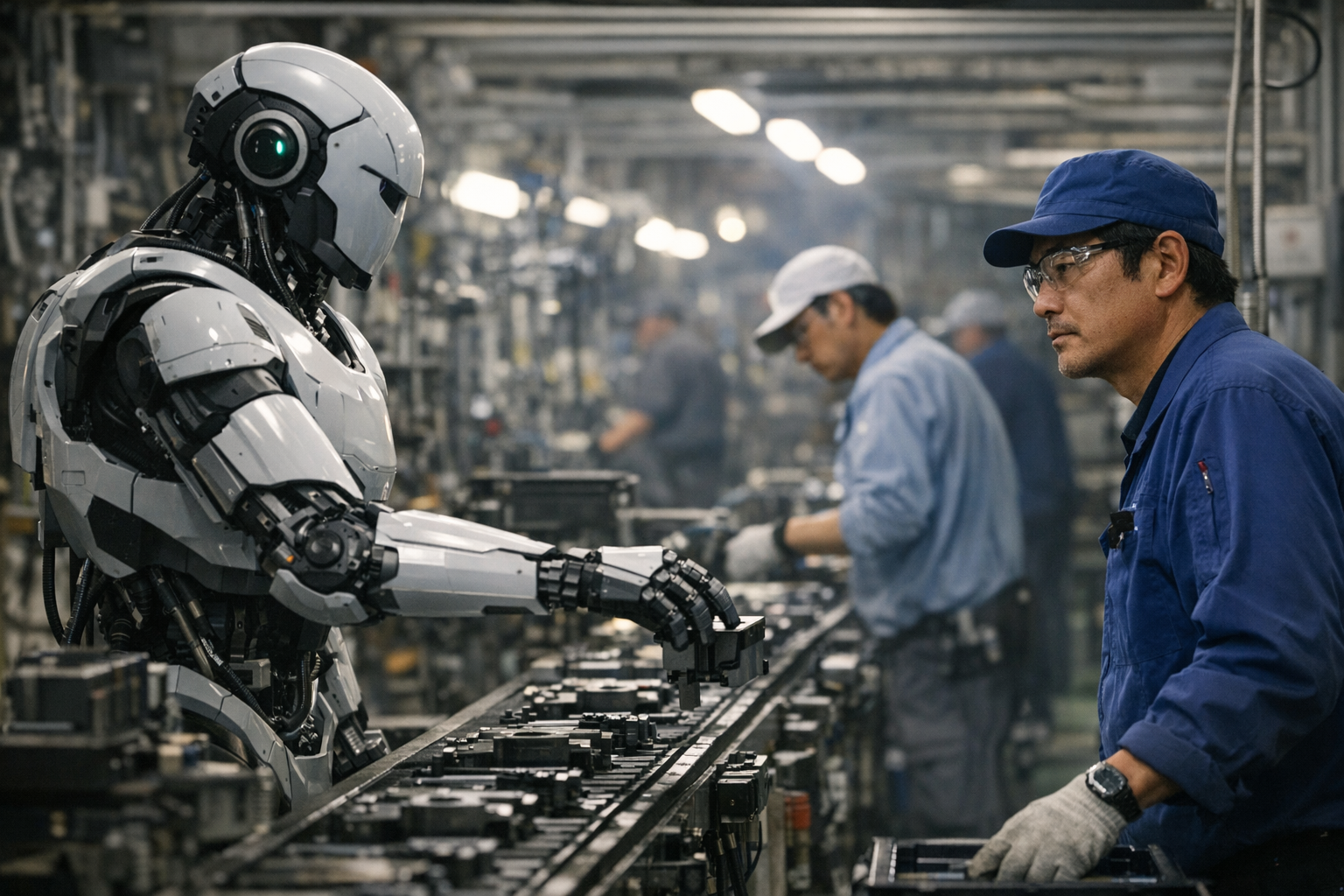
Japan Commits $6.3 Billion Under PM Takaichi to Strengthen AI and Robotics Capabilities
The investment targets core AI development, robotics integration, and industrial deployment as Japan aims to capture 30% of the global physical AI market by 2040.
Under Prime Minister Sanae Takaichi, Japan has committed approximately $6.3 billion to strengthen its core AI capabilities, advance robotics integration, and accelerate industrial deployment. The Ministry of Economy, Trade and Industry has set an ambitious target: capturing 30 percent of the global physical AI market by 2040.
Japan's physical AI market is currently valued at $307 million but is projected to reach $6.76 billion by 2035, reflecting the government's bet that embodied intelligence — AI systems that operate in the physical world through robots and autonomous machines — will become the next major technology battleground.
The urgency is partly demographic. Japan faces a projected shortfall of 11 million workers by 2040, making automation not just an economic opportunity but a structural necessity. Japanese manufacturers already account for roughly 70 percent of the global industrial robotics market, giving the country a natural advantage in integrating AI with physical systems.
Major incumbents including Toyota, Mitsubishi Electric, and Honda retain significant advantages in robotics hardware and manufacturing expertise. Meanwhile, a growing cohort of startups is carving out roles in orchestration software, perception systems, and workflow automation — the software layers that connect AI capabilities to physical robot operations.
The investment package spans several priorities: foundational AI model development, semiconductor supply chain resilience, robotics research centers, and workforce training programs. METI is also establishing regulatory sandboxes to allow companies to test autonomous systems in real-world industrial environments before formal safety standards are finalized.
Japan's approach stands out from other national AI strategies by prioritizing physical AI and robotics rather than focusing exclusively on large language models and digital services, reflecting the country's industrial base and workforce challenges.
Newsletter
Get Lanceum in your inbox
Weekly insights on AI and technology in Asia.