Modi Government Faces Court Challenge Over AI Surveillance of India's Largest Youth Protest in Decades
A student activist has asked the Delhi High Court to declare mass surveillance of protesters unconstitutional after AI-equipped camera vans monitored demonstrations over exam paper leaks.
India's reckoning with AI-powered policing has reached the courts. Activists are challenging Prime Minister Narendra Modi's government over the use of artificial intelligence surveillance at the largest youth protest India has seen in decades — a legal fight that will outlast the demonstrations that sparked it, according to Reuters reporting carried by The Japan Times.
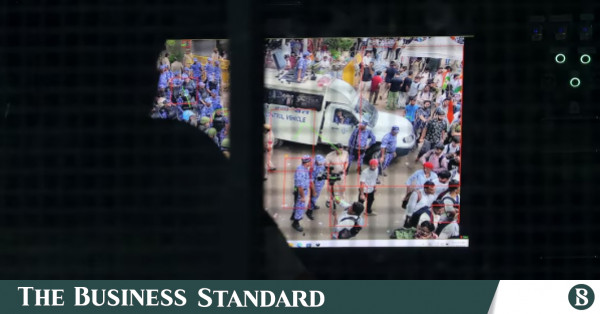
The controversy erupted during last week's student protests over exam paper leaks, when demonstrators posted images of a mobile police surveillance van parked at the main Delhi protest site — its telescopic mast carrying cameras with a 360-degree view of the crowd, feeding what activists say are AI-driven facial recognition systems.
A test case with no law to test against
Student activist Aishe Ghosh has petitioned the Delhi High Court to declare mass surveillance of peaceful protesters unconstitutional, to order the destruction of all personal data collected during the demonstrations, and to force the framing of binding guidelines on how surveillance technology can be used against public assemblies.
The core problem her petition exposes: India has no law governing police use of facial recognition technology. The government maintains the monitoring was legal and in the public interest to ensure law and order; activists counter that scanning thousands of faces at a political protest, with no statutory basis, retention limits or oversight, is exactly the scenario constitutional privacy protections exist to prevent.
The protest won; the data remains
The demonstrations themselves ended in a rare political setback for Modi — Education Minister Dharmendra Pradhan resigned, and the government announced a panel to overhaul the cheating-prone examination system. But Ghosh is pressing on with the case precisely because the surveillance infrastructure, and whatever databases it populated, survive the protest that justified them.
The case is being watched as a test of federal powers — and as a precedent-setter for the region. India operates one of the world's largest biometric identity systems in Aadhaar, its police forces have procured facial recognition aggressively, and its 2023 data protection law largely exempts government agencies.
Asia's surveillance fault line
The Delhi case lands amid a broader Asian divergence on AI surveillance: China has normalized it, Japan and South Korea are writing procedural limits, and Southeast Asian governments are quietly procuring the technology while their AI governance frameworks stay silent on police use. A ruling from India — the region's largest democracy — on whether AI surveillance of protest is compatible with constitutional rights would echo well beyond Delhi.
Newsletter
Get Lanceum in your inbox
Weekly insights on AI and technology in Asia.