ISRO Ends Eight-Month Launch Drought With EOS-05, India's First Geosynchronous Imaging Satellite
The 2,367-kg Earth observation satellite lifted off aboard GSLV-F17 from Sriharikota, giving India near-continuous imaging of its landmass for disaster monitoring, agriculture and AI-driven analytics.
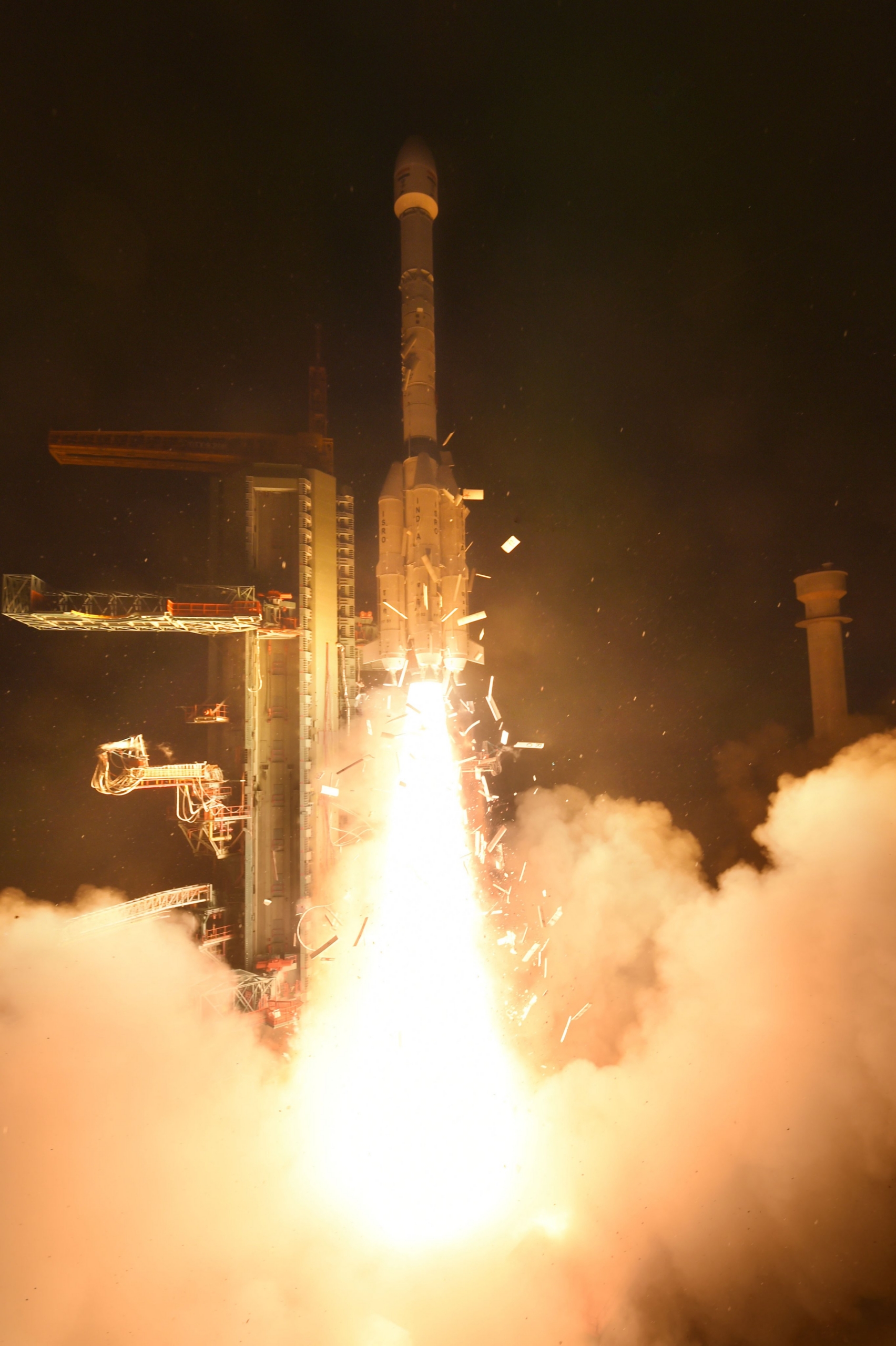
India's space program is back on the board. The Indian Space Research Organisation successfully launched the GSLV-F17/EOS-05 mission on September 4 at 2:55 AM IST from the Second Launch Pad at Satish Dhawan Space Centre, Sriharikota — ending a gap of nearly eight months since the agency's previous launch and delivering its first successful mission of the year.
An eye in the sky that never looks away
The 2,367-kg EOS-05 is India's first imaging satellite designed to operate from geosynchronous orbit. Where conventional Earth-observation satellites in low orbit revisit a location every few days, EOS-05's fixed vantage point enables near-continuous observation of the Indian landmass — with the ability to read mineral dust, crop stress, and fire signatures at refresh rates measured in minutes rather than days.
That cadence matters most in emergencies. Near-real-time imagery feeds directly into disaster response for cyclones, floods, and wildfires, while steady coverage supports agriculture monitoring, water management, and environmental analytics — domains where Indian agencies and startups are increasingly applying machine learning models that are only as good as the freshness of their input data.
A GSLV redemption arc
The mission also rehabilitates the GSLV Mk II vehicle, whose reputation was dented by the EOS-03 failure in 2021 and subsequent program setbacks. A clean flight restores confidence in the launcher just as ISRO ramps commercial ambitions through NewSpace India and prepares for its human spaceflight program.
For Asia's broader space economy — where China launches weekly and Japan is scaling its H3 — EOS-05 is a reminder that India's program, though slower-cadenced, keeps hitting distinctive technical firsts on a fraction of its rivals' budgets.
Newsletter
Get Lanceum in your inbox
Weekly insights on AI and technology in Asia.