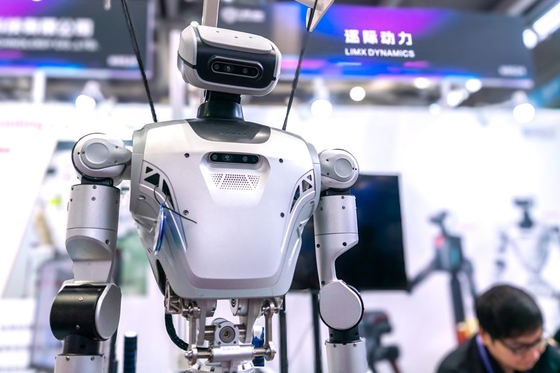
LimX Dynamics Raises $200M at $2.2B Valuation to Push Humanoid Autonomy Past the Demo
The Shenzhen robotics maker's raise — one of the largest in China's humanoid wave — targets the hard part everyone's demo videos skip: autonomous execution of complex, unscripted tasks.
LimX Dynamics has raised nearly $200 million at a valuation of 15 billion yuan (about $2.2 billion), the Shenzhen-based company confirmed — one of the largest single rounds yet in China's crowded humanoid robotics field, and a vote of confidence in a company positioning itself around autonomy rather than choreography, according to Nikkei Asia and Caixin.
Betting on the unscripted
The capital is earmarked for a specific and unglamorous goal: improving the ability of LimX's humanoids to perform complex tasks autonomously, without the teleoperation or pre-scripted routines that quietly power most of the sector's viral demonstrations. That framing is a tell about where China's humanoid race is maturing. The mechanical problem — bipedal robots that walk, balance and manipulate — is increasingly solved. The valuable problem is the software: perception, planning and dexterous execution robust enough to survive a real warehouse or factory without a human at the controls.
Inside China's humanoid surge
LimX's round is one entry in an extraordinary month. AI2 Robotics raised roughly $735 million at a near-$3 billion valuation; PsiBot hit $1.48 billion in a round led by carmaker Chery. Globally, robotics startups have raised $18.8 billion in 2026 — already a record — with Chinese firms accounting for a disproportionate share, per Crunchbase.
The pattern behind the numbers is distinctly Chinese: rounds anchored by automakers, component manufacturers and local government funds rather than pure venture capital, underwriting manufacturing scale as much as R&D. It is the electric-vehicle industrial playbook applied to embodied AI — flood the supply chain, compress costs through domestic competition, and let the survivors export.
The autonomy gap is the moat
LimX's strategic wager is that when the humanoid shakeout comes — and with capacity scaling faster than proven demand, most observers expect one — the winners will be decided by autonomy, not hardware specs or unit price. A robot that reliably completes unstructured tasks without supervision is worth an order of magnitude more than one that performs a rehearsed routine on stage.
That is the right thing to be spending $200 million on, and the hardest to prove. The metric that matters for LimX won't be another demo video; it will be a customer's reorder after the first fleet runs a shift unattended. Until embodied AI crosses that line, valuations in the sector remain bets on a capability that is improving fast but has not yet, anywhere, been shown to work at scale.
Newsletter
Get Lanceum in your inbox
Weekly insights on AI and technology in Asia.
More in Startups

Travis Kalanick's Atoms Eyes Robotaxis — With Uber's $100 Million and His Old AV Team

Fluidstack Closes $1.5 Billion Led by Jane Street — Revenue Up From $1.8M to a Projected $660M, While Owning Zero Chips