Japan's Semiconductor Resurgence: Rapidus, Fujitsu, and the Architecture of a Comeback
With Rapidus powering up its 2nm pilot line and Fujitsu announcing 1.4nm AI chip plans, Japan is positioning itself as a critical node in the global AI supply chain — backed by tens of billions in foreign capital and government subsidy.
For the better part of two decades, Japan's semiconductor industry existed in a state of managed decline. Once the dominant force in global chip manufacturing — accounting for more than half of worldwide production in the late 1980s — the country watched its share erode to under 10% as TSMC, Samsung, and Intel scaled to nodes that Japanese fabs could not match. Government reports acknowledged the slide. Industry leaders spoke of it as structural and, implicitly, irreversible. That narrative is now being actively dismantled.
The Rapidus Milestone
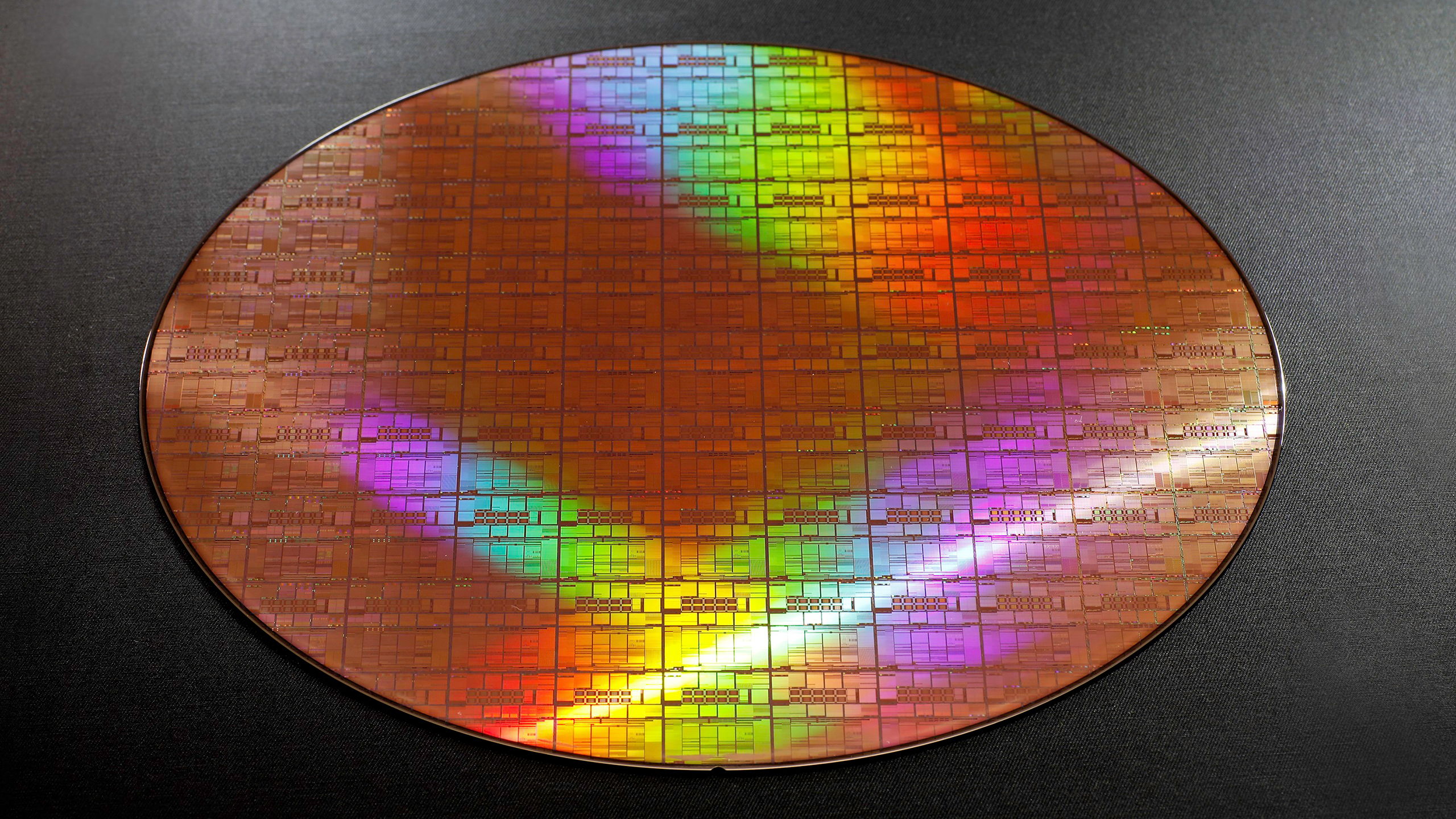
The most visible marker of Japan's semiconductor ambitions is Rapidus, the Hokkaido-based consortium formed in 2022 with backing from eight major Japanese corporations and the Japanese government. In early 2026, Rapidus powered up its pilot production line for 2nm-class chips, built using IBM's Gate-All-Around transistor architecture licensed under a bilateral technology-sharing agreement. The pilot line is not yet producing chips at commercial volume — that target remains 2027 — but the fact that wafers are moving through the fab represents a milestone that many industry observers considered improbable just three years ago.
What makes Rapidus significant is not simply the node it is targeting but the strategic logic behind it. Japan is not attempting to replicate TSMC's business model of high-volume contract manufacturing across a broad range of process nodes. Instead, Rapidus is designed to occupy a narrow but critical position: producing cutting-edge logic chips for AI and high-performance computing workloads, with a focus on low-volume, high-mix production for specialized applications. This is a calculated bet that the AI infrastructure buildout will create demand for custom silicon that TSMC's enormous fabs, optimized for scale, are not ideally structured to serve.
Fujitsu's 1.4nm Ambition
If Rapidus represents the near-term catalyst, Fujitsu's announcement of 1.4nm AI chip development for domestic manufacturing signals the longer arc. Fujitsu, whose Fugaku supercomputer held the world's top performance ranking from 2020 to 2022, is leveraging its deep expertise in high-performance compute architectures to design purpose-built AI accelerators at process nodes that push beyond what any Japanese fab has previously attempted.
The 1.4nm target is ambitious by any standard. Only TSMC and Samsung have publicly committed to production timelines at that node, and both face significant engineering challenges with extreme ultraviolet lithography at such scales. Fujitsu's approach relies on a combination of domestic design capability and potential manufacturing partnerships — including with Rapidus itself — that would keep the most sensitive elements of the chip supply chain within Japanese borders. For a country that has spent years watching its semiconductor intellectual property flow to foreign foundries, this represents a meaningful strategic shift.
The Capital Behind the Comeback
Japan's semiconductor ambitions are not being funded on aspiration alone. Microsoft's commitment of over $10 billion to AI and cloud infrastructure in Japan — including data center construction and partnerships with domestic chip companies — provides a capital anchor that was absent in previous attempts to revive the industry. This investment is part of a broader pattern: major American technology companies are diversifying their semiconductor supply chains away from exclusive dependence on TSMC in Taiwan, and Japan offers a combination of engineering talent, political stability, and geographic proximity to key Asian markets that few alternatives can match.
The Japanese government has matched foreign capital with domestic subsidy at a scale not seen since the VLSI Technology Research Association of the 1970s. The Ministry of Economy, Trade and Industry has committed over $25 billion in subsidies and incentives for semiconductor manufacturing, with additional support for materials and equipment suppliers. TSMC's own fab in Kumamoto, which began volume production in late 2025, received substantial government support and demonstrated that large-scale chip manufacturing can be operationalized in Japan within competitive timelines.
The Supply Chain Geometry
Japan's semiconductor resurgence must be understood within the evolving geometry of the global AI supply chain. The concentration of advanced chip manufacturing in Taiwan — where TSMC produces the overwhelming majority of the world's most sophisticated processors — has become a source of acute strategic anxiety for governments and corporations worldwide. Every escalation in cross-strait tensions between China and Taiwan sends tremors through the technology industry, and the search for manufacturing alternatives has become a matter of national security for the United States, Europe, and Japan alike.
Japan holds a distinctive position in this restructuring. It remains the world's leading supplier of semiconductor materials and manufacturing equipment, controlling dominant market shares in photoresists, silicon wafers, and critical etching and deposition tools. Companies like Tokyo Electron, Shin-Etsu Chemical, and JSR are indispensable to every advanced fab on the planet, including TSMC's. By adding advanced logic manufacturing to its existing materials and equipment dominance, Japan would become the only country outside Taiwan and South Korea with a vertically integrated presence across the semiconductor value chain.
The Risks That Remain
The optimistic narrative should not obscure the substantial risks. Rapidus has no commercial track record, and scaling from pilot production to reliable volume manufacturing is the most difficult transition in the semiconductor business. The company's timeline — commercial production by 2027 — is aggressive even by the standards of established foundries. Talent acquisition remains a persistent challenge; Japan's semiconductor workforce aged out during the industry's long decline, and rebuilding the specialized engineering pipeline takes years, not quarters.
There is also the question of whether the market opportunity that Rapidus is targeting — low-volume, high-mix production for AI and HPC — is large enough to sustain the economics of a cutting-edge fab. TSMC's profitability depends on enormous utilization rates across its facilities. A fab designed for specialized production runs a higher risk of underutilization, and the economics of 2nm manufacturing leave very little margin for error.
What This Means
Japan's semiconductor strategy is not a nostalgic attempt to reclaim past glory. It is a forward-looking industrial policy designed around a specific thesis: that the AI era will create demand for a more distributed, diversified semiconductor supply chain, and that Japan's existing strengths in materials, equipment, and engineering can be leveraged to capture a disproportionate share of that demand. Whether Rapidus and Fujitsu can execute on that thesis will not be clear for several years. But the capital is committed, the fabs are being built, and the strategic logic is sound. For the first time in a generation, Japan's semiconductor industry is a story about what comes next rather than what was lost.
Newsletter
Get Lanceum in your inbox
Weekly insights on AI and technology in Asia.