Korea's Memory Paradox: Record Profits, Bear Market — and a Market That Now Leads Wall Street
Samsung just guided to the most profitable quarter in Korean corporate history while the KOSPI sits 22 percent below its peak. Inside the fight over whether the AI memory supercycle has topped.
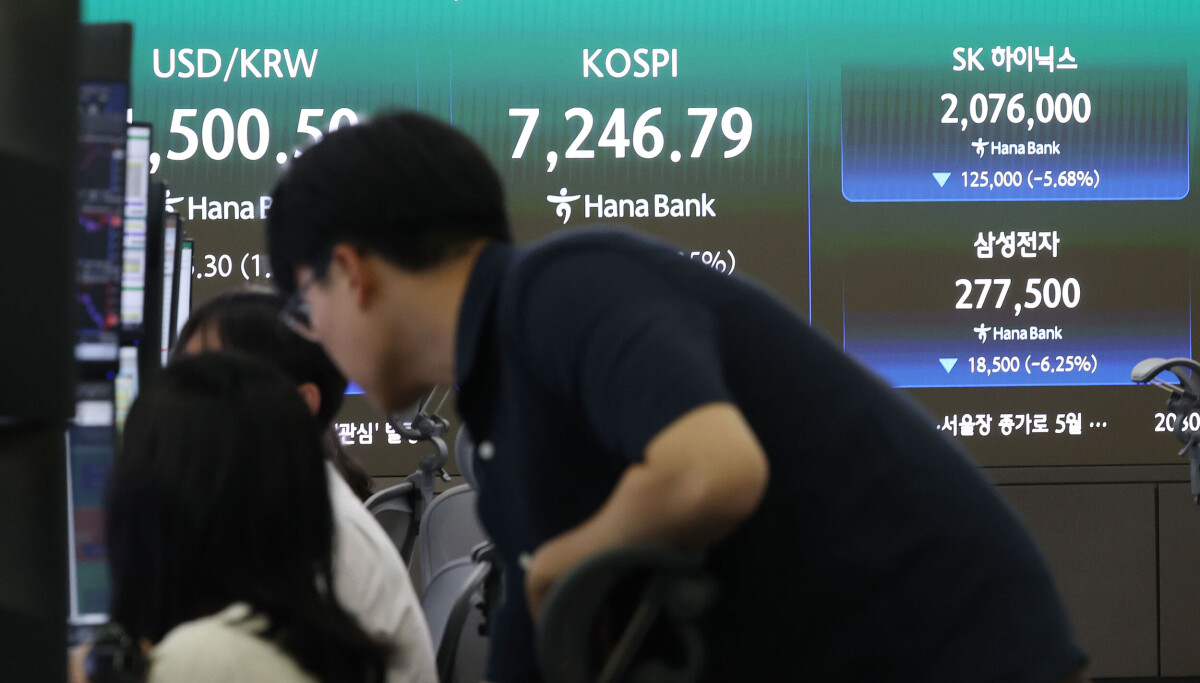
Something strange is happening in Seoul. Samsung Electronics guided to an 89.4 trillion won quarterly operating profit — a 19-fold increase year over year and the most profitable quarter in Korean corporate history — and its stock fell 6.3 percent. The KOSPI, which touched a record on June 22, has since collapsed more than 22 percent into a bear market. Rarely has the gap between reported earnings and market pricing been this wide, this fast.
The Bull Case: This Time the Demand Is Real
The fundamental picture remains extraordinary. High-bandwidth memory is sold out through 2027 at Samsung and SK Hynix. South Korea's government is orchestrating an $880 billion decade-long investment program, with four new fabs planned. NAVER is scaling sovereign AI infrastructure toward gigawatt capacity with NVIDIA. Every hyperscaler capex announcement — and they now total hundreds of billions annually — flows disproportionately into Korean memory.
On the bulls' math, Samsung trading 26 percent below its high while printing 52 percent operating margins is a gift. Petra Capital's Albert Yong captured the sanguine view: the record quarter "had largely been priced in" — a valuation statement, not a demand warning.
The Bear Case: Peak Margins Are the Sell Signal
The bears read the same numbers differently. Memory is history's most reliably cyclical industry, and 52 percent operating margins are precisely what the top of a cycle looks like. The trigger for the July selloff was not weak demand but "more moderate DRAM price hikes" than expected — the second derivative turning before the first.
The concentration risk compounds the fear. Samsung and SK Hynix so dominate the KOSPI that Korea's market has become a single leveraged bet on memory pricing. When that bet wobbles, the whole index convulses — including a 7.89 percent single-day crash and repeated circuit-breaker episodes.
The Tail Now Wags the Dog
The most consequential shift may be structural: the KOSPI no longer dances to Wall Street's tune — it sets it. Korean chip earnings and pricing updates now move the Nasdaq, Tokyo and Taipei, a reversal captured in local commentary that would have been unthinkable five years ago. SK Hynix's pricing disclosures, released after the Seoul close, have become scheduled global macro events.
This is what it means for AI to have a physical supply chain: the marginal price of intelligence is set in Icheon and Pyeongtaek, and the world's investors have finally noticed.
July 30 Decides the Narrative
The stalemate breaks on July 30, when Samsung reports full results and guides second-half pricing. Hold the line on DRAM and HBM pricing, and the bear market becomes one of history's great buying opportunities. Confirm moderation, and Korea's record profits will mark the top of the greatest memory cycle ever recorded. Retail investors — parked in bank deposits, refusing to buy this dip for the first time in a decade — are effectively voting that they don't know. Neither, in truth, does anyone else.
Newsletter
Get Lanceum in your inbox
Weekly insights on AI and technology in Asia.