The Open-Weight Price War: How Chinese Models Broke Western Labs' Pricing Power
Frontier labs raised prices just as near-frontier Chinese models went almost free. The enterprise market's response is a structural shift, not a blip.
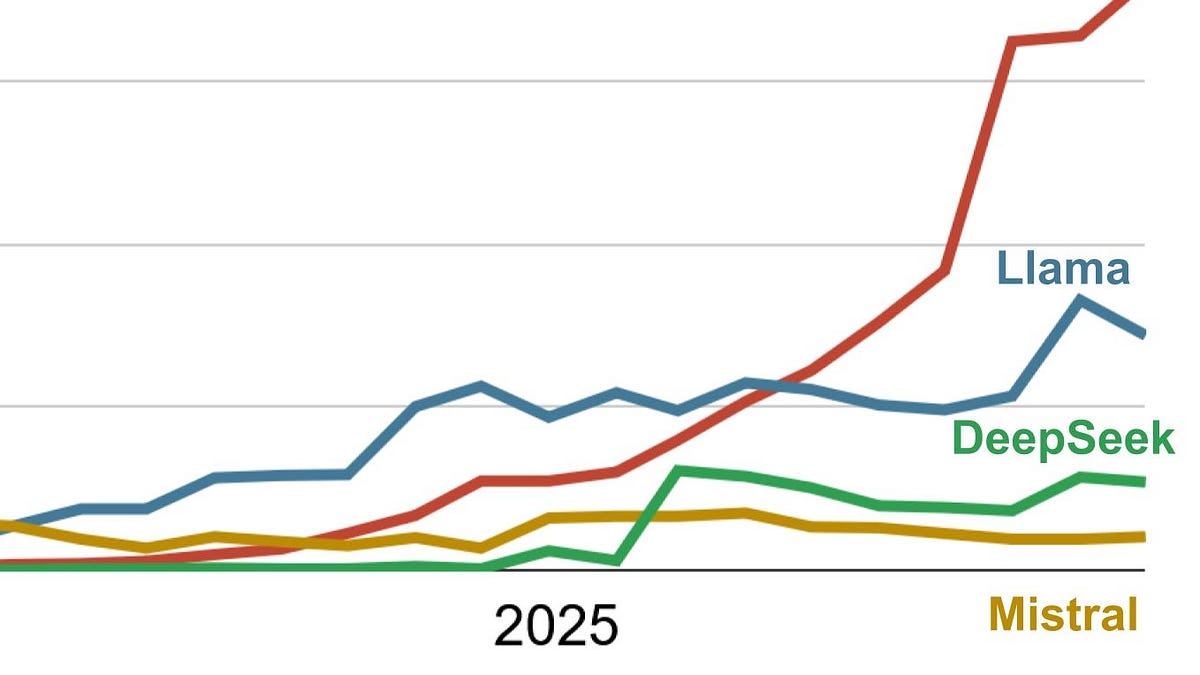
Something structural happened to the AI market this year, and the CNBC data confirming that Chinese models now carry 30-46% of US enterprise token traffic is only the most visible symptom. The deeper story is about pricing power — who has it, who lost it, and why the second half of 2026 looks nothing like the first.
The Timeline That Explains Everything
Recall the sequence. In the first quarter, enterprise AI spending surged almost without controls — the "tokenmaxxing" era, when companies threw frontier models at everything. In the second quarter came the hangover: finance departments imposed cost controls, vendors introduced usage-based billing, and CIOs started asking which workloads actually needed a frontier model.
Into that newly price-sensitive market, Western labs raised prices. Anthropic's Fable 5 moved to usage credits at $10/$50 per million tokens. OpenAI's premium tiers crept upward. And at precisely the same moment, Z.ai released GLM-5.2 under an MIT license at $1.40/$4.40 — within a percentage point of Claude Opus 4.8 on key agentic benchmarks, at roughly a fifth of the cost.
The result was mechanical. Money flowed downhill.
The Advisor Model Becomes Standard
What makes this shift durable rather than cyclical is that enterprises have built architecture around it. The now-mainstream "advisor model" pattern routes everything through a cheap open-weight default — GLM-5.2, DeepSeek, Kimi — and escalates to a Western frontier model only when the cheap tier fails or the task demands it. Once that routing layer exists, frontier models become the exception path, invoked by policy rather than habit.
That inverts the labs' business model assumption. OpenAI and Anthropic priced their flagships as the default tier for enterprise work. The market has repriced them as a premium fallback — consulted, like a specialist, only when needed.
Why the Labs Can't Just Cut Prices
The obvious response — match Chinese pricing — is largely unavailable. Western labs are carrying staggering compute commitments (Anthropic's multi-billion data center leases, OpenAI's trillion-dollar infrastructure pipeline) and are marching toward IPO roadshows this fall that depend on revenue growth and improving margins. Cutting flagship prices 80% to chase open-weight economics would detonate both. Their bet instead is differentiation: agentic reliability, enterprise trust, compliance — and, increasingly, government-mediated exclusivity in regulated sectors, where data jurisdiction fears keep Chinese APIs out.
The Strategic Endgame
For Beijing's labs, near-free open weights are not charity; they are strategy. Every derivative model, every fine-tune, every startup that standardizes on Qwen or GLM deepens an ecosystem that Chinese companies anchor — the same playbook Android used against the iPhone's margins. The open question is whether Washington's August 1 frontier-model framework treats open-weight foreign models as a supply-chain risk to be regulated, or accepts that the price floor has permanently moved.
Either way, the era in which Western frontier labs could price without reference to Chinese competition is over. That is the real headline behind the token statistics.
Newsletter
Get Lanceum in your inbox
Weekly insights on AI and technology in Asia.