Altman's 'New World Order': OpenAI Rewrites the Rules as Rivals Close In
As Anthropic overtakes it on revenue and ChatGPT's traffic slips, OpenAI is pushing a US-led global AI forum. It reads less like altruism than strategy.
When Sam Altman used a Financial Times op-ed this month to call for a "new world order" in artificial intelligence, the framing was grand: a US-led international forum, modeled on the International Atomic Energy Agency, that would certify AI models, police safety and hand approved technology to nations and companies that follow the rules. Read in isolation, it sounds like statesmanship. Read against OpenAI's competitive position in mid-2026, it looks like something more calculated.
The ground is shifting under OpenAI
For the first time, the company that defined the generative-AI era is no longer the obvious leader. Anthropic now reports a higher annualized revenue run-rate — roughly $47 billion against OpenAI's $25-33 billion — and expects to reach profitability by 2029, a year ahead of its larger rival. In May, Deutsche Bank flagged that ChatGPT's share of monthly visits to consumer AI tools fell below 50% of the market for the first time, as users increasingly hop between models. Anthropic has also pulled ahead in business subscriptions, the segment with the stickiest revenue.
Google, meanwhile, has converted its Gemini line and its distribution muscle — Search, Android, Workspace, its own TPUs — into a threat OpenAI cannot answer on price or reach. The result is a market that once looked like a runaway to one where OpenAI is defending, not extending, its lead.
Why a "referee" helps the frontrunner-turned-defender
This is the context that makes Altman's proposal so interesting. A certification body with "real enforcement teeth," staffed by governments and technical experts, would raise the cost and complexity of shipping frontier models. Incumbents with compliance teams, government relationships and safety infrastructure absorb that cost easily; fast-moving challengers and open-weight labs feel it acutely.
Altman frames this as guarding against "commercial pressures that can lead to unsafe racing." But it is worth noticing who benefits when the racing slows. A regulatory moat is still a moat. When a company that has lost its speed advantage argues for rules that reward scale and institutional heft, the safety case and the strategic case point in the same direction.
The government-equity gambit
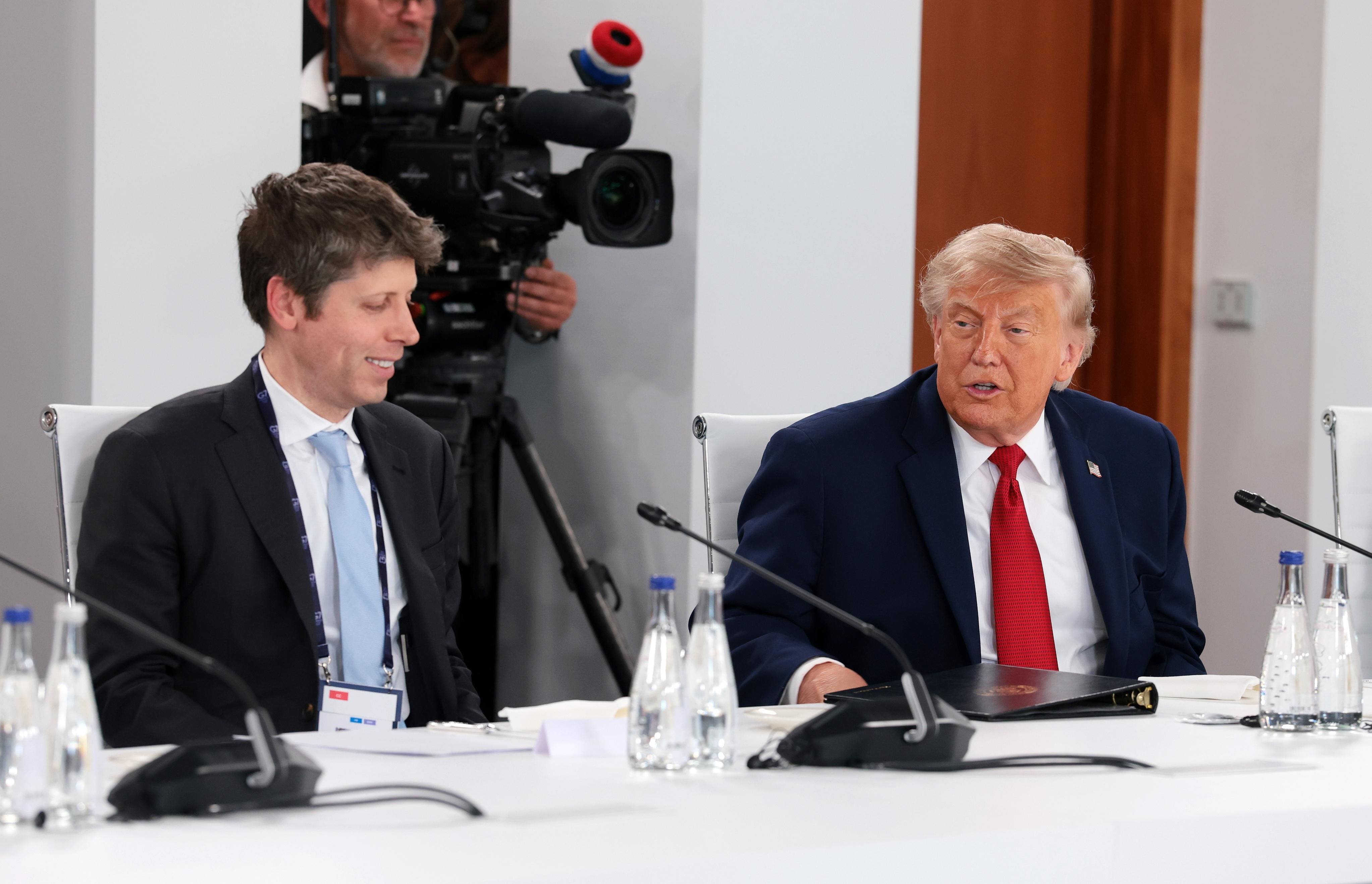
The forum proposal does not stand alone. OpenAI has floated giving the US government a roughly 5% equity stake — about $42.6 billion at its $852 billion valuation — with the suggestion that Anthropic, Google and Meta contribute equivalent slices to a sovereign-fund-style vehicle. Offered ahead of a contentious IPO and a Trump administration keen on a "cohesive US-led approach," it reads as an attempt to fuse OpenAI's commercial future to American state interest. If Washington owns a piece of the leading lab, the line between national champion and private company blurs — to that lab's advantage.
What it signals
The deeper signal is that the AI contest has entered a new phase. The first was about who could build the best model; the emerging one is about who writes the rules those models operate under. OpenAI, no longer able to win purely on capability, is trying to shift the battlefield to governance, standards and geopolitics — terrain where its scale, capital and proximity to power still count.
Whether the world wants an AI order designed in part by one of its most conflicted participants is the question regulators should be asking. Altman is right that frontier AI needs coordinated oversight. The harder problem is building it so that it serves the public, not the incumbent proposing it.
Newsletter
Get Lanceum in your inbox
Weekly insights on AI and technology in Asia.