Compute Goes to Orbit: The Race to Build AI Data Centers in Space
SpaceX's Starmind, plus orbital-compute ambitions from Google, SpaceX, and Blue Origin, signal a serious bet that the next AI data centers belong in space. The physics is unforgiving — and the case is more credible than it sounds.
For two years the story of AI has been a story about the ground: gigawatt data centers, contested substations, and the water it takes to keep racks cool. Now some of the biggest names in the industry want to move the whole problem off the planet.
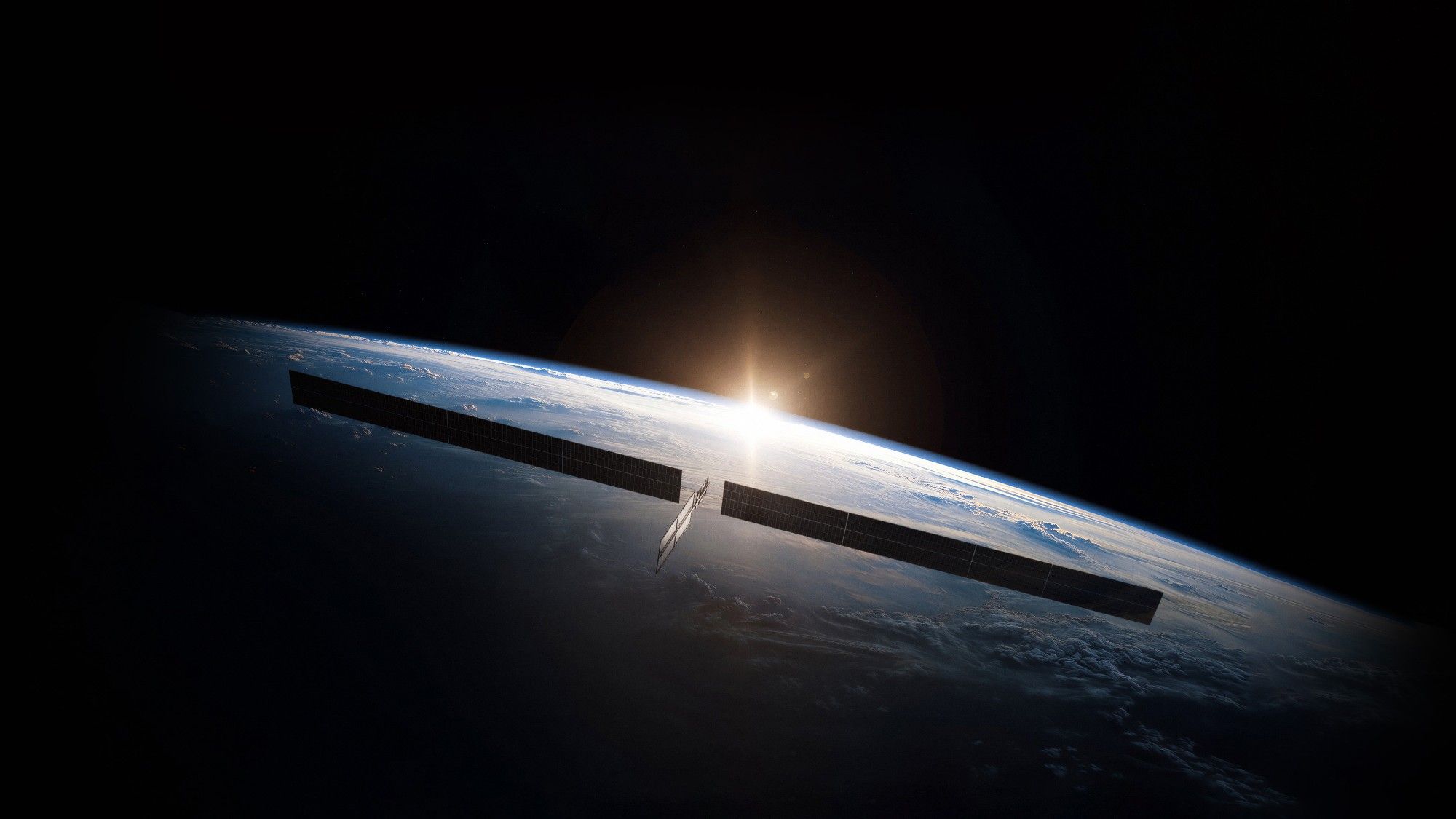
SpaceX's filing for Starmind — a megaconstellation of up to one million satellites that would run AI inference in orbit — is the most concrete version yet of an idea suddenly being taken seriously. Google has floated its own orbital-compute research, has ties to SpaceX through Starlink, and Blue Origin has signaled interest in space-based data infrastructure. What was a thought experiment in 2024 is now a filed regulatory plan in 2026.
Why Look Up
The drivers are the same constraints throttling the terrestrial buildout. Power is the first: data centers are colliding with grid limits, and new capacity can take years to permit and energize. In orbit, the sun is a nearly uninterrupted power source. SpaceX says Starmind satellites would stay solar-powered for more than 99 percent of their operation, sidestepping the queue for grid interconnections entirely.
Water and cooling are the second. On the ground, chilling dense AI clusters consumes enormous volumes of water and electricity. In space there is no water problem at all; heat is rejected by radiating it into the cold of the vacuum. And for some workloads there is latency: orbital inference beamed down over Starlink's optical laser mesh could return results in milliseconds, close enough to the edge to matter.
Then there is sheer scale. SpaceX's pitch hinges on a fully reusable Starship cheap enough to loft "one million tonnes per year of satellites," each generating around 100kW of compute per tonne — an implied 100 gigawatts of new orbital capacity annually. That number only works if launch costs collapse, which is precisely the bet.
Why the Skeptics Aren't Wrong
The physics that makes space attractive also makes it brutal. Radiation degrades processors and flips bits; hardening or shielding a million AI accelerators is an unsolved problem at that volume. Thermal dissipation is the counterintuitive killer: a vacuum is a superb insulator, so radiative cooling alone struggles to shed the heat that modern accelerators throw off, forcing large, heavy radiators that eat into the mass budget.
Launch cost remains the load-bearing assumption. Absent a reliable, dramatically cheaper Starship cadence, the economics never close. And servicing is the quiet problem — a failed rack on Earth is a truck roll; a failed satellite is space debris. A five-year design life across a million objects raises real questions about congestion and end-of-life disposal in already crowded low orbits.
What It Means for the Buildout
The honest read is that orbital data centers are not about to replace the Kentucky and Texas megacampuses now anchoring AI compute. Deals like Anthropic's $19 billion TeraWulf lease show where the near-term capacity is actually being poured — into the ground.
But Starmind matters as a signal. When the world's most capable launch operator files to put a million inference satellites in orbit, it is conceding that Earth's power and cooling limits are becoming the binding constraint on AI. Space may start as a niche — latency-sensitive edge inference, or workloads that can tolerate radiation — before proving out at scale, if it ever does. The race is early, the physics is unforgiving, and the prize is a compute frontier with no grid queue and no water bill. That is enough to make even the skeptics watch the sky.
Newsletter
Get Lanceum in your inbox
Weekly insights on AI and technology in Asia.