Why Korea's Crown-Jewel Chipmaker Listed in New York — and What It Says About Asia's Capital Markets
SK Hynix's record $26.5 billion ADR offering is a triumph for the company and an indictment of the 'Korea discount.' The implications reach far beyond one stock.
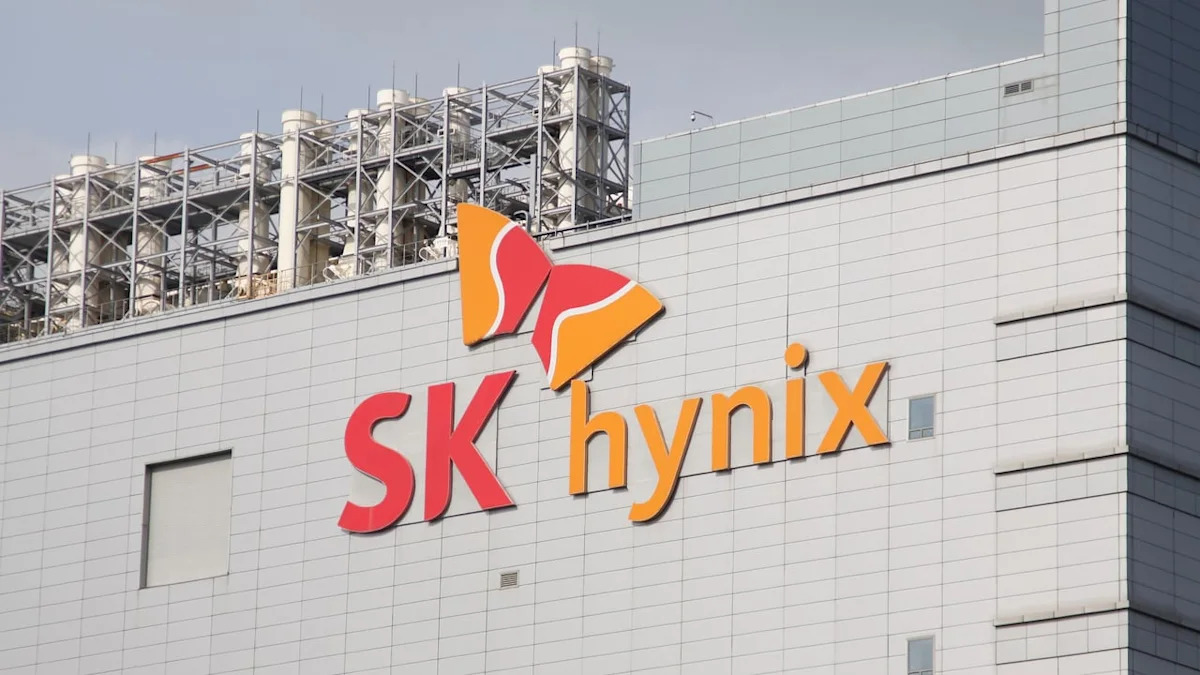
When SK Hynix's American depositary receipts began trading on the Nasdaq on Friday, the $26.5 billion raise didn't just break Alibaba's twelve-year-old record for the largest US listing by a foreign company. It crystallized three uncomfortable truths — about Korean capital markets, about the structure of the AI trade, and about where the gravitational center of semiconductor investing now sits.
Truth One: The Korea Discount Is Real, and Companies Are Done Waiting
For years, Korean policymakers have promised to close the persistent valuation gap between Korean listed companies and their global peers — a gap attributed to opaque chaebol governance, weak shareholder returns, and geopolitical risk premiums. The "Corporate Value-up Program," modeled on Japan's successful governance reforms, was supposed to fix it.
SK Hynix's decision to raise capital in New York rather than Seoul is a verdict on that effort. The world's dominant supplier of high-bandwidth memory — with 56.4% of a market that has become the single most supply-constrained input to the AI buildout — concluded that American investors would pay more for its shares than its home market would. The first-day trading, which valued the ADRs well above the underlying Seoul-listed shares' implied price, proved the point.
The precedent matters. If Korea's second-most-valuable company can access deeper pools of capital at better valuations abroad, every Korean board contemplating a major raise now has a template. Seoul's exchange faces the same competitive anxiety that has haunted London since Arm chose the Nasdaq.
Truth Two: Memory Is the New Bottleneck, and Investors Know It
The offering's timing was not accidental. Over the past eighteen months, the scarcity narrative in AI hardware has migrated from GPUs to the memory that feeds them. HBM capacity is sold out years ahead; conventional DRAM prices have surged as fabs convert lines to HBM production; and Micron's newly announced $250 billion US investment plan confirms that memory makers now command capital budgets once reserved for logic foundries.
SK Hynix raised $26.5 billion precisely because investors have internalized this shift. The proceeds — earmarked for Korean fab expansion and EUV lithography tools — are a bet that the memory supercycle has structural, not cyclical, drivers: every incremental AI accelerator requires more stacked DRAM than the last, and inference workloads are proving even more memory-hungry than training.
The risk, as always in memory, is that today's shortage funds tomorrow's glut. Samsung and Micron are racing to add HBM capacity, and Chinese makers are pushing into commodity DRAM, potentially freeing global capacity. SK Hynix's wager is that its packaging expertise and Nvidia relationship keep it ahead of the commoditization wave. History suggests memory leadership is defensible for years, not decades.
Truth Three: The AI Trade Is Rebalancing Toward Asia's Picks and Shovels
For two years, the public-market AI trade was effectively one stock: Nvidia. What Friday's debut demonstrates is how much appetite exists for the Asian supply chain behind the accelerator — and how few direct vehicles US investors have had to express it.
Consider the week's tape: SK Hynix's record ADR debut in New York, foundry Nexchip listing in Hong Kong, Unitree advancing toward its Shanghai IPO, and Tokyo's chip suppliers surging on Micron's capex plans. Asian exchanges and Asian companies are supplying the equity market's next tranche of AI exposure — memory, legacy silicon, robotics, materials — while the US listings capture the premium tier.
The pattern echoes the smartphone era, when the value chain's profits concentrated in a handful of Western brands but the investable growth increasingly sat with Asian component makers. The difference this time is scale: AI infrastructure spending is measured in the hundreds of billions annually, and the memory layer alone is now a strategic asset class.
The Watchpoint
The unresolved question is political. A Korean national champion now has a shareholder base — and a regulatory audience — split between Seoul and Washington, at a moment when chip supply chains are the sharpest edge of US-China competition and Korean fabs sit within missile range of the DMZ. Capital has voted for globalization; policy is moving the other way. How SK Hynix navigates that divergence will tell us whether Friday's record was the start of a trend or its high-water mark.
Newsletter
Get Lanceum in your inbox
Weekly insights on AI and technology in Asia.