SK Hynix's Ascent to Memory King Shows Where the Real AI Profits Are
The Korean chipmaker's early bet on high-bandwidth memory has paid off spectacularly — and the Vera Rubin cost breakdown shows why its position keeps strengthening.
For decades, memory was the semiconductor industry's most brutal commodity business — a boom-bust cycle that rewarded scale and punished everyone in the downturns. SK Hynix's bet on high-bandwidth memory has broken that pattern, and as Nikkei Asia chronicles this week, the Korean chipmaker has ascended to become the industry's new memory king with margins that look more like a monopolist's than a commodity supplier's.
The Bet That Paid Off
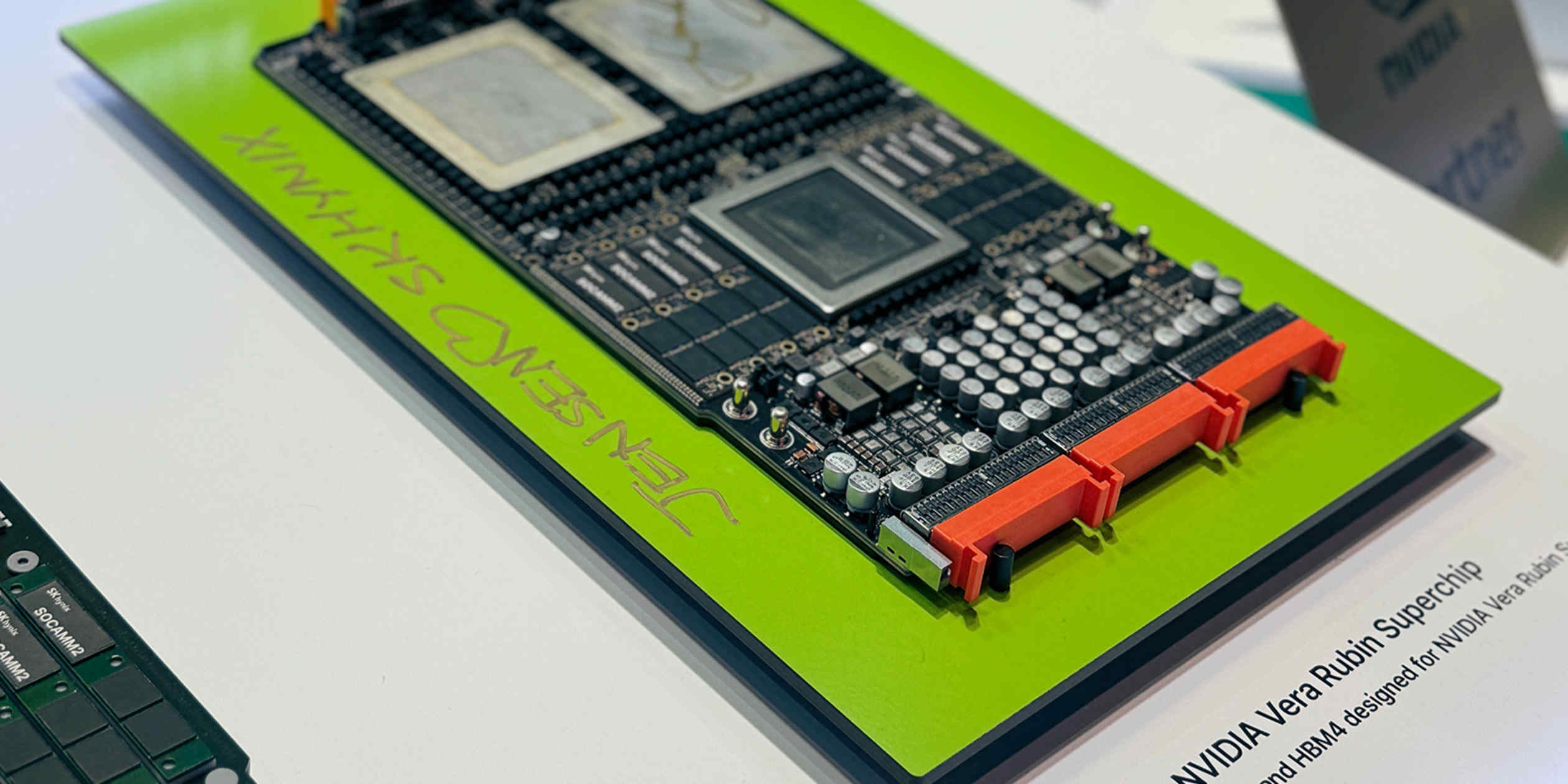
SK Hynix committed to HBM — the stacked, specialized memory that feeds AI accelerators — years before the generative AI boom made it indispensable, while rivals treated it as a niche. That head start translated into a close relationship with Nvidia as its primary HBM supplier and a profit margin Nikkei describes as "shockingly high." In the AI era, memory is no longer interchangeable: qualifying HBM for a frontier accelerator takes years, and switching suppliers mid-generation is nearly impossible.
The numbers behind this week's Morgan Stanley teardown of Nvidia's Vera Rubin rack show just how structural the advantage has become. Memory now represents 25-30% of a $7.8 million rack — over $2 million per rack, up 485% generation-over-generation. Multiply by the hundreds of thousands of racks hyperscalers plan to deploy, and HBM has become arguably the single most profitable component category in computing.
The Challengers Are Coming
Dominance invites assault from every direction. Samsung, embarrassed at losing the HBM crown to its smaller rival, is pouring capital into HBM4 qualification and won a place in Nvidia's 16-high HBM4 roadmap. Micron is expanding aggressively with US subsidies. And China's memory makers — CXMT and YMTC, now reportedly in talks with Apple for conventional chips — are moving up the value chain, though export controls keep them generations behind on HBM.
There is also a subtler risk: hyperscalers want to break the bundle. Morgan Stanley notes that buying memory directly, bypassing Nvidia's markup, could save $1 million per rack — a dynamic that could commoditize the customer relationship even if the technology stays scarce.
Korea's Concentrated Fortune
For South Korea, SK Hynix's ascent is both windfall and warning. Memory exports have powered the KOSPI's record run and anchor the government's ₩1 trillion-plus AI investment plans. But the country's economic fortunes are now concentrated in a duopoly whose pricing power depends on an AI capex boom continuing indefinitely — and on China's memory industry staying contained. The new memory king rules a rich kingdom, but one whose borders are drawn in Washington as much as in Icheon.
Newsletter
Get Lanceum in your inbox
Weekly insights on AI and technology in Asia.