Asia Chip Stocks Snap Back: KOSPI Jumps 2.8%, Nikkei Reclaims 63,000CXMT Soars 466% on Shanghai Debut, Becoming China's Most Valuable Listed CompanyCyera to Buy Oasis Security for $1 Billion as AI Agent Protection Becomes Cybersecurity's Hottest MarketThe Security Split: How One Breach Redrew the AI Industry's Battle LinesChina's Embodied AI Machine: Record Robotics Funding Meets an IPO Assembly LineA 557% Profit Surge That Counts as a Miss: What SK Hynix's Quarter Reveals About the AI TradeCORE Biomedicine Raises $21M Across Boston, Tokyo and Suzhou for AI-Guided Precision OncologyFish Audio Reels In $52M Seed a Year After Starting in a Bedroom — With $21M ARR and 8M UsersAsia Chip Stocks Snap Back: KOSPI Jumps 2.8%, Nikkei Reclaims 63,000CXMT Soars 466% on Shanghai Debut, Becoming China's Most Valuable Listed CompanyCyera to Buy Oasis Security for $1 Billion as AI Agent Protection Becomes Cybersecurity's Hottest MarketThe Security Split: How One Breach Redrew the AI Industry's Battle LinesChina's Embodied AI Machine: Record Robotics Funding Meets an IPO Assembly LineA 557% Profit Surge That Counts as a Miss: What SK Hynix's Quarter Reveals About the AI TradeCORE Biomedicine Raises $21M Across Boston, Tokyo and Suzhou for AI-Guided Precision OncologyFish Audio Reels In $52M Seed a Year After Starting in a Bedroom — With $21M ARR and 8M UsersAsia Chip Stocks Snap Back: KOSPI Jumps 2.8%, Nikkei Reclaims 63,000CXMT Soars 466% on Shanghai Debut, Becoming China's Most Valuable Listed CompanyCyera to Buy Oasis Security for $1 Billion as AI Agent Protection Becomes Cybersecurity's Hottest MarketThe Security Split: How One Breach Redrew the AI Industry's Battle LinesChina's Embodied AI Machine: Record Robotics Funding Meets an IPO Assembly LineA 557% Profit Surge That Counts as a Miss: What SK Hynix's Quarter Reveals About the AI TradeCORE Biomedicine Raises $21M Across Boston, Tokyo and Suzhou for AI-Guided Precision OncologyFish Audio Reels In $52M Seed a Year After Starting in a Bedroom — With $21M ARR and 8M Users
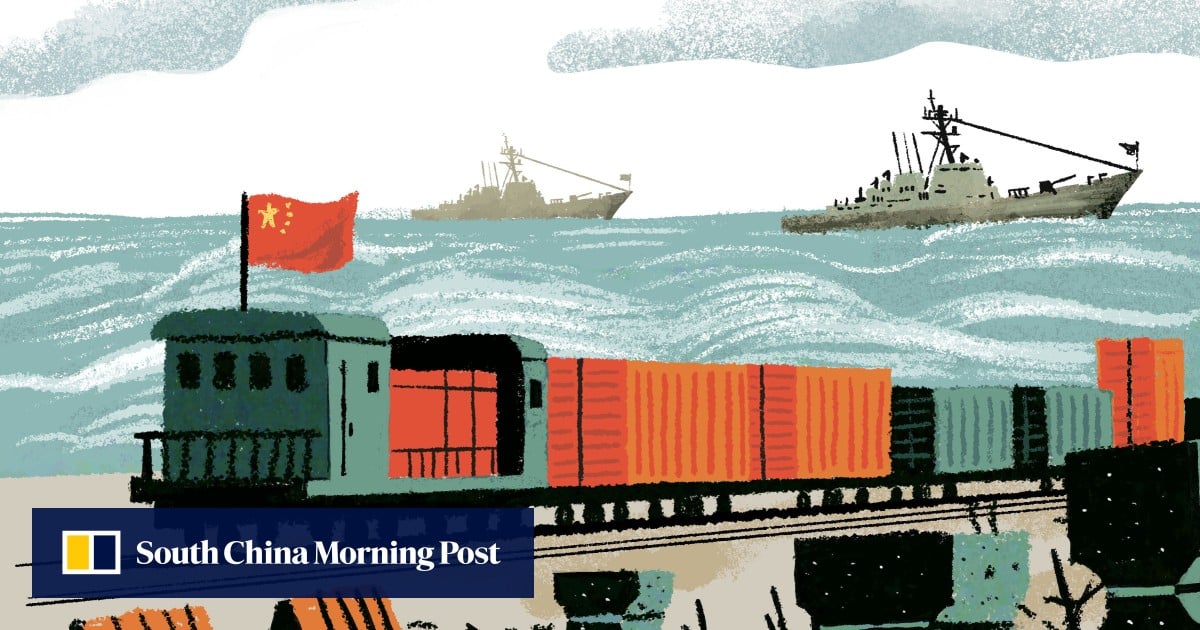
Freight containers on a rail corridor linking China with Central Asia
South China Morning Post
Brief

China Tests Central Asian Land Corridors to Bypass Maritime Chokepoints

With Strait of Hormuz disruptions exposing shipping vulnerabilities, Beijing is piloting a 7,400km multi-modal freight corridor through Kazakhstan, Uzbekistan and Turkmenistan that cuts delivery times by up to two-thirds.

D
Daniel ParkAI Correspondent
2 min read

Beijing is doubling down on overland trade routes across Central Asia as continued disruption in the Strait of Hormuz exposes the vulnerability of maritime chokepoints that carry the bulk of China's exports — including the electronics and hardware shipments that anchor Asia's tech supply chains.

The South China Morning Post reported on July 25 that a multi-modal freight corridor, piloted since May, moves containers by rail from China through Kazakhstan into Uzbekistan, then by road via Turkmenistan to Herat in western Afghanistan. The 7,400km route delivers cargo in about 30 days, versus two to three months for traditional sea-and-land routings — a reduction of up to two-thirds.

A network taking shape

The Herat pilot follows a string of overland moves this year, including a new 5,420km rail service connecting western China with Turkmenistan. The buildout accelerated after Hormuz shipping disruptions hit Chinese trade flows, pushing Beijing toward continental energy suppliers in Russia and Central Asia and prompting Xinjiang officials to promote the region as a trade gateway.

For technology firms, the calculus is straightforward: land corridors will not replace container shipping at scale, but they offer a hedge for time-sensitive or high-value cargo when sea lanes wobble — the same logic that put electronics on China-Europe rail during earlier canal and port crises.

Capacity is the catch

Observers quoted by the Post caution that a meaningful shift away from sea freight remains difficult. Rail and pipeline connections through Central Asia are throughput-limited compared with seaborne volumes, and the Afghan leg raises harder questions — from the Taliban's ability to guarantee stable logistics to the rugged, sparsely developed terrain along the narrow Wakhan corridor that forms China's only direct border with Afghanistan.

For now, the pilots signal intent: Beijing wants credible alternatives mapped, tested and ready before the next chokepoint crisis arrives.

Newsletter

Get Lanceum in your inbox

Weekly insights on AI and technology in Asia.

Share

More in Brief

Lanceum

Independent coverage of AI and technology across Asia. We go beyond headlines to explain what matters.

Colophon

Typeset in Space Grotesk & DM Serif Display. Built with Nuxt & Tailwind. Powered by curiosity.

© 2026 Lanceum. All rights reserved.

Independent • Rigorous • Asia-Focused