China Fast-Tracks Humanoid Robots Into Industry Under Nationwide Embodied AI Program
The MIIT and state assets regulator are pushing companies to deploy robots in factories, hospitals and emergency response — with 2026 shipments forecast to hit 50,000 units.
China has launched a nationwide program to accelerate the adoption of humanoid robots and embodied artificial intelligence across real-world industries, in a coordinated push announced by the Ministry of Industry and Information Technology and the State-owned Assets Supervision and Administration Commission.
From Demos to Deployment
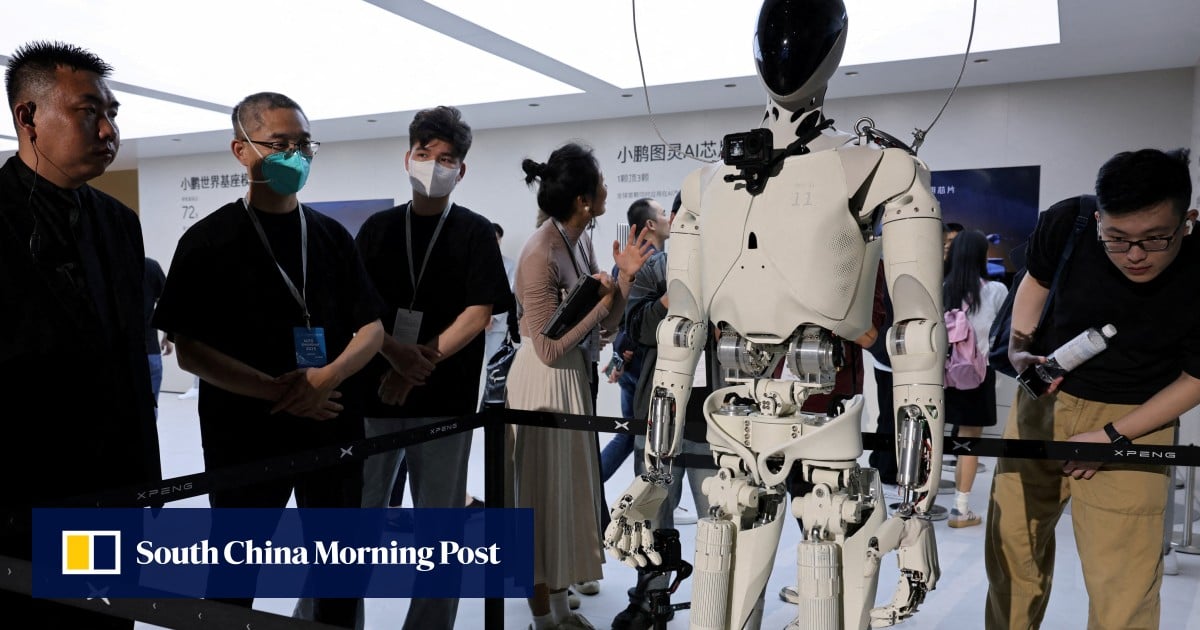
The program directs companies — including the state-owned enterprises that dominate China's heavy industry — to move robots out of exhibition halls and into workplaces: factories, logistics centers, hospitals, power grids and emergency response operations. The goal for 2026 is explicit: shift roughly 10,000 humanoid robots from demonstrations into real jobs, with government procurement and subsidized pilots smoothing the path.
The directive formalizes what has been building all year. Morgan Stanley recently raised its forecast for China's 2026 humanoid shipments to 50,000 units, up from an earlier estimate of 28,000, as manufacturers like UBTech, Unitree and AgiBot ramp mass production lines.
The Industrial Logic
Beijing's calculus mirrors its playbook for electric vehicles and solar: use domestic scale to drive down unit costs, build a complete local supply chain, then dominate the global export market as the technology matures. Chinese manufacturers already control most of the world's supply of harmonic reducers, servo motors and other components that make up a humanoid's bill of materials.
The embodied AI push also answers a demographic clock. China's working-age population is shrinking by millions each year, and officials increasingly frame robotics not as a labor threat but as a labor replacement strategy for factories that cannot hire.
Regional Ripples
The program sharpens pressure on Japan and South Korea, both of which have made physical AI a national priority — Japan through its new $6.2 billion sovereign AI model program with a physical AI focus, and Korea through massive private-sector robotics investment. The race to industrialize embodied AI is becoming Asia's defining technology contest of the decade, and China just committed the full weight of its industrial state to winning it.
Newsletter
Get Lanceum in your inbox
Weekly insights on AI and technology in Asia.