Tesla Launches Unsupervised Robotaxi Rides in Miami — No One in the Front Seat
Miami becomes Tesla's first robotaxi market outside Texas and California, with fully driverless rides from day one and Florida's rain posing the hardest test yet for camera-only FSD.
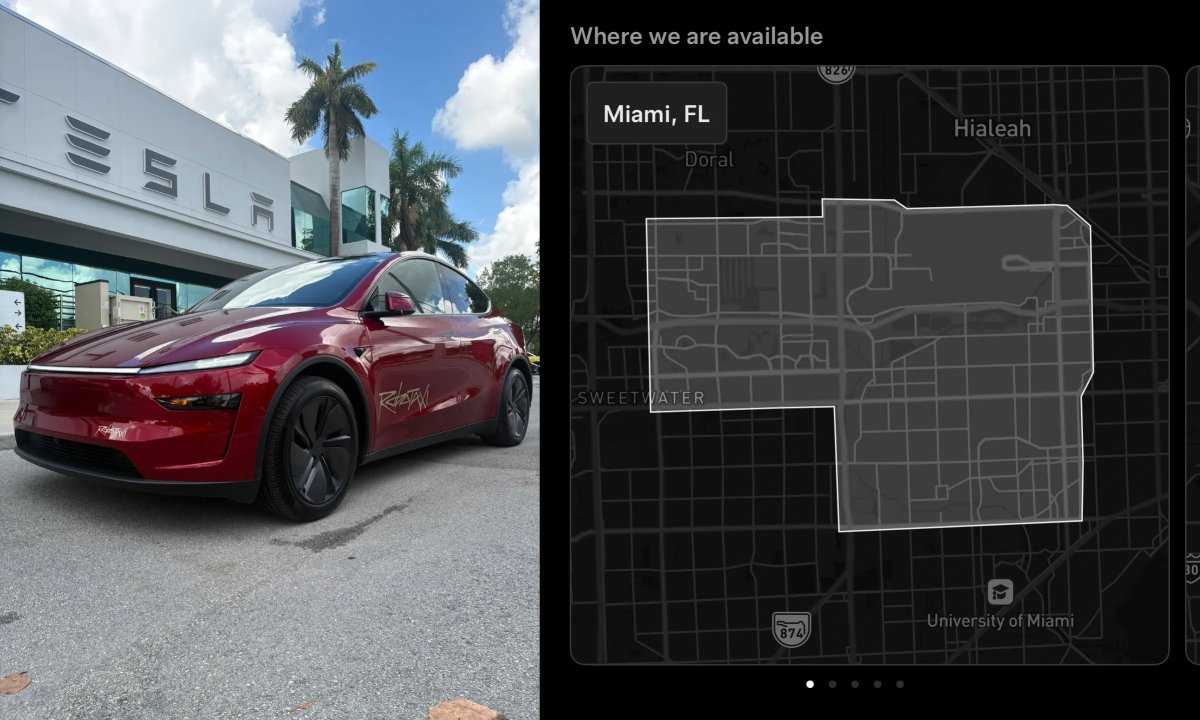
Tesla's driverless robotaxis are now roaming Miami. The company launched its Robotaxi service in the city on July 3 — its first market outside Texas and California — and the rides are fully unsupervised from day one: no safety driver, no human in the front seat.
Ashok Elluswamy, Tesla's VP of AI Software, confirmed the unsupervised operation within hours of the launch. Early riders posted footage of driverless Model Y rides across a service zone covering roughly 10 to 14 square miles of western Miami-Dade, though downtown and Brickell are excluded for now.
Rain check
Miami is more than a market expansion — it is a live stress test. Federal regulators flagged the performance of Tesla's camera-only Full Self-Driving stack in heavy rain as a potential safety deficiency in March. South Florida's daily summer downpours will now test that gap in production, without lidar or radar as backup.
Tesla has not disclosed its Miami fleet size. In Texas, its authorized fleet stood at 42 vehicles per DMV filings — against Waymo's 577 registered driverless vehicles in the same state — underscoring how far Tesla still trails in scale even as it matches rivals in autonomy claims.
The expansion map
The Robotaxi network now spans Austin, Dallas, Houston and Miami, and Tesla says it is targeting operations in a dozen U.S. states by year-end. The company is betting that its vision-only approach — cheaper per vehicle than sensor-laden competitors — will let it scale faster once regulators are satisfied.
For Asia's automakers and robotaxi operators, from WeRide's Dubai launches to Baidu's Apollo Go, the Miami debut is a reminder that the autonomy race is entering its deployment phase — and that the pace is being set in city-sized increments, one rainy commute at a time.
Newsletter
Get Lanceum in your inbox
Weekly insights on AI and technology in Asia.