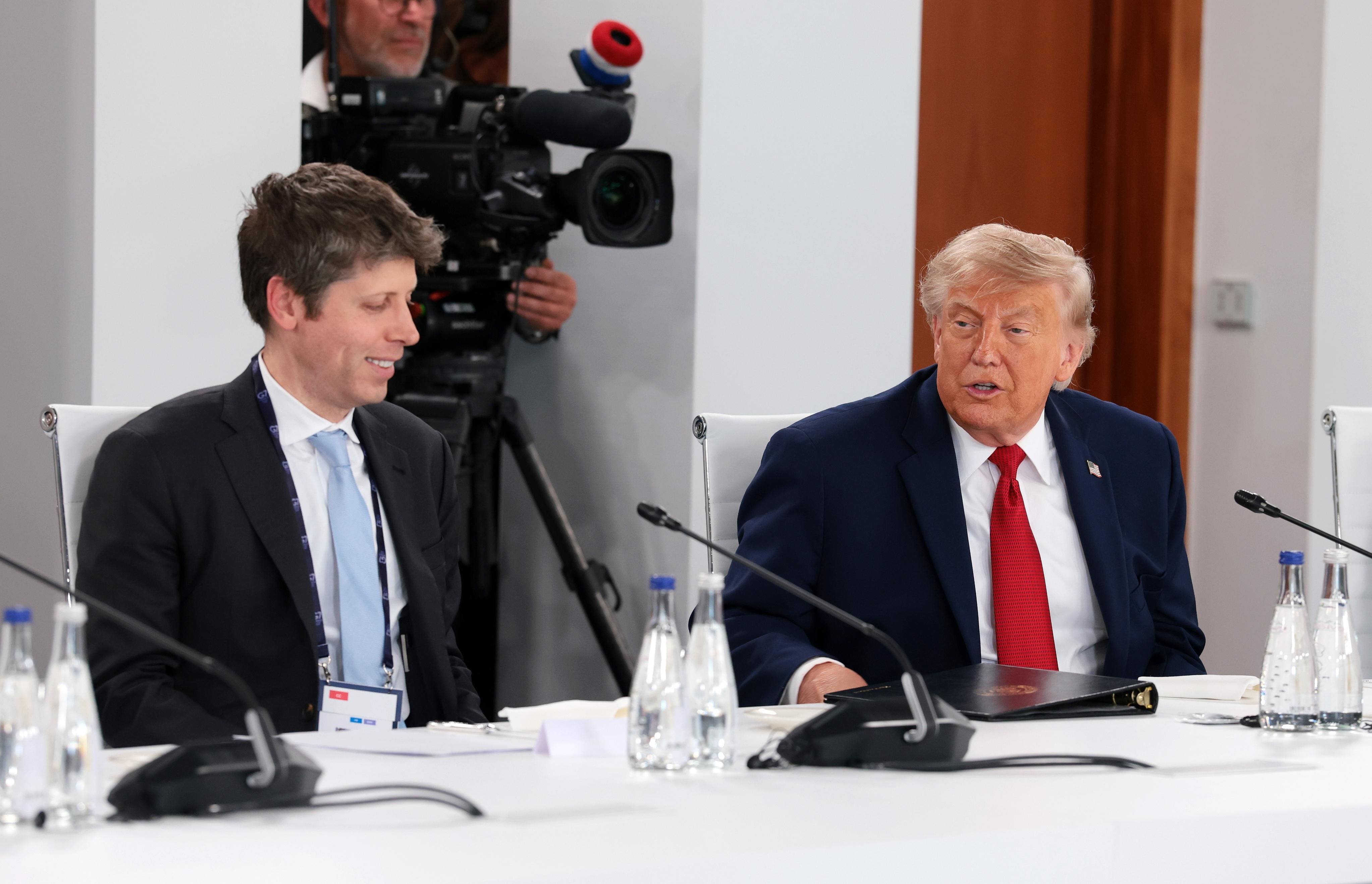
When the Regulator Becomes a Shareholder: What OpenAI's 5% Offer Really Means
Altman's Alaska-fund pitch is being read as generosity, desperation and genius all at once. The truth is simpler — frontier AI and the state are merging, and everyone is negotiating the terms.
Strip away the Alaska Permanent Fund branding and Sam Altman's proposal to hand Washington 5% of OpenAI reduces to a single transaction: equity in exchange for legitimacy. The question worth analyzing is not whether it's a good deal — it's why, in July 2026, a frontier AI lab believes it needs to buy legitimacy at all, and what the industry looks like once the purchase clears.
The Squeeze
Consider OpenAI's position. GPT-5.6 — its most capable model family — has been gated behind a government-managed access list since late June, pending the White House's voluntary standards framework. Its chief rival Anthropic just lived through a 19-day export-control suspension of Fable 5, resolved only after committing to government pre-release access and threat-intelligence sharing. The NSA is drafting classified benchmarks that define which "covered frontier models" trigger review windows. Whatever the formal language, model release in the United States now runs through Washington.
In that world, the state already holds a de facto golden share in every frontier lab. Altman's proposal simply prices it. Five percent — roughly $42.6 billion at the last valuation — is the visible cost of converting an adversarial veto into an aligned interest. A government that owns the upside thinks differently about suspensions, export controls and IPO timing. That is precisely what makes the offer both shrewd and troubling.
The Conflict Nobody Prices
The governance problem writes itself: the same government that would collect dividends from OpenAI's growth also decides when OpenAI's models ship, how its competitors are regulated, and which foreign rivals get chip access. Equity aligns interests — that is the problem. A state shareholder has a fiscal reason to prefer incumbents over challengers, speed over caution, and domestic champions over open ecosystems. Anthropic, Google and Meta declining to participate isn't stubbornness; it's an unwillingness to fund a precedent where regulatory goodwill correlates with cap-table generosity.
There's also the Sanders angle, which deserves more attention than it's received. Altman has been briefing the senator most associated with taxing extreme wealth. The all-labs fund is, functionally, a voluntary windfall tax paid in equity rather than cash — offered before Congress designs a mandatory one. Getting ahead of redistribution politics is not philanthropy; it's rate-setting.
The Asian Mirror
The proposal looks less exotic from Asia, where the state-capital merger in AI is already the operating model. Beijing's AI champions raise from state-backed funds and accept party direction as a cost of capital. Korea's $576 billion semiconductor drive fuses chaebol balance sheets with national strategy. Singapore and the UAE take direct sovereign stakes in AI infrastructure. The American innovation had been keeping ownership and oversight formally separate. Altman's proposal concedes that the separation is no longer credible — and tries to design the merger on industry-friendly terms before it's designed for them.
The irony is sharp: the US spent 2025 warning allies about state-entangled Chinese AI firms. Its answer in 2026 may be to become a shareholder in its own.
What to Watch
Three tells will reveal whether this is a trial balloon or a trajectory. First, whether the White House framework due this month references benefit-sharing or public equity in any form. Second, whether OpenAI's IPO filings — expected within the year — carve out a government allocation. Third, whether a second lab breaks ranks; a lone participant makes this an OpenAI story, two make it a regime.
The deepest implication is the one Altman surely intends: a government invested in OpenAI's success is a government invested in the scaling thesis itself — in compute buildouts, in favorable energy policy, in export regimes that protect incumbents' moats. The 5% isn't the story. The story is that frontier AI is becoming, formally and financially, an arm of the state — and the only remaining negotiation is over the terms.
Newsletter
Get Lanceum in your inbox
Weekly insights on AI and technology in Asia.