Neuromorphic Computers Can Now Solve Physics Simulations Once Reserved for Supercomputers
Brain-inspired processors demonstrate massive energy improvements over GPUs, and a new EU project aims to push the technology further using microscopic LEDs.
Brain-modeled processors are now solving complex physics equations that were once the exclusive domain of energy-hungry supercomputers, with energy improvements that could reshape the computing landscape. Recent benchmarks show neuromorphic hardware achieving 280 to 21,000x energy improvement over GPUs on spiking neural network tasks and 150 to 1,300x improvement on physics simulations.
How Brain-Inspired Computing Works
Neuromorphic chips process information using artificial neurons and synapses that mimic the brain's architecture. Unlike conventional processors that execute instructions sequentially or GPUs that perform massively parallel matrix operations, neuromorphic hardware computes through sparse, event-driven signals — firing only when relevant information arrives. This asynchronous approach is inherently more energy-efficient, since inactive neurons consume virtually no power.
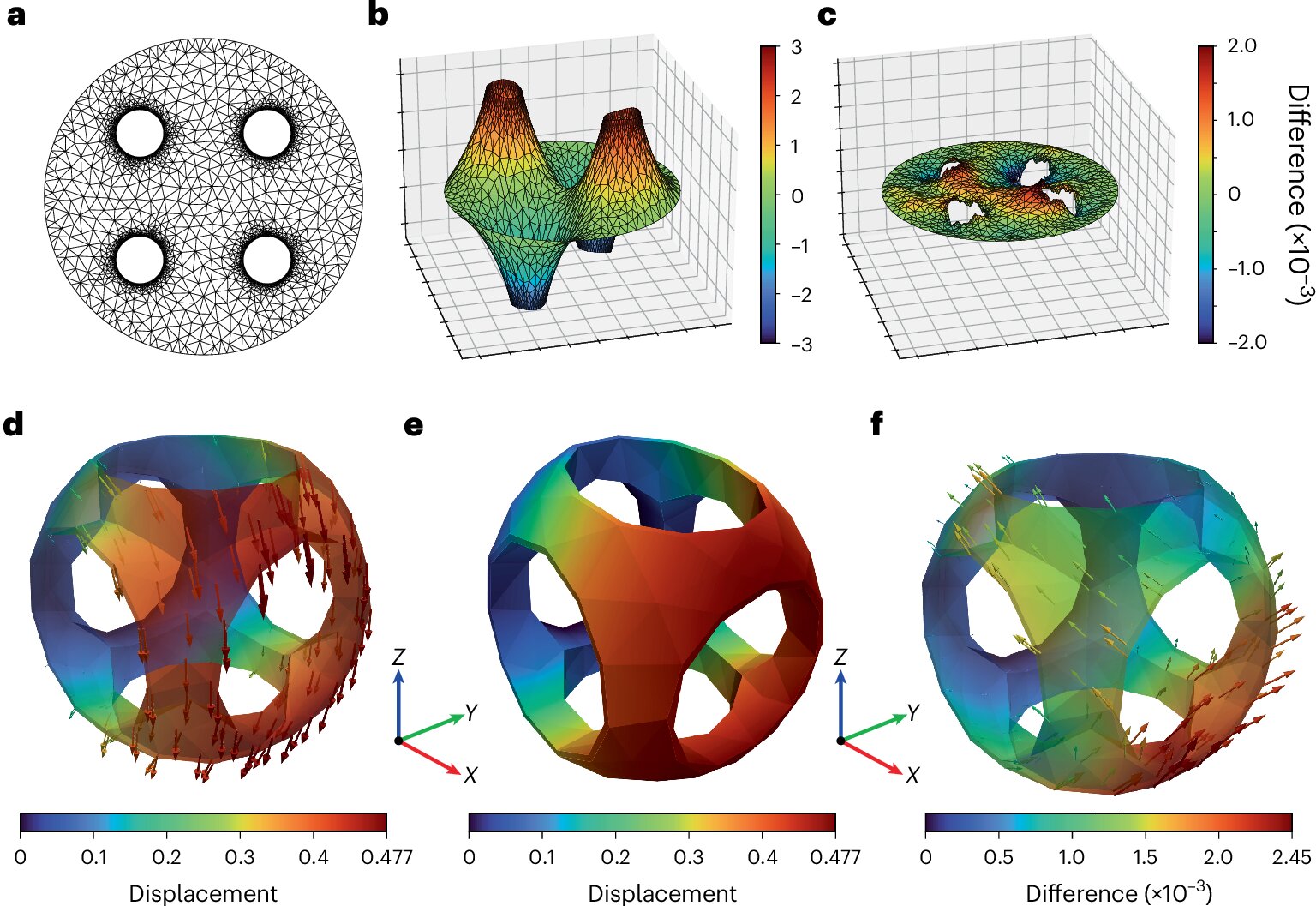
The physics simulation results are particularly striking because partial differential equations — the mathematical foundation of weather modeling, fluid dynamics, and materials science — have traditionally required supercomputing clusters that consume megawatts of power. Running the same equations on neuromorphic hardware at a fraction of the energy cost could democratize access to high-fidelity physical simulations.
The BRIGHT Project
Europe is betting big on the next leap forward. The EU's BRIGHT project, backed by 15 million euros in funding and launching in April 2026, takes an unconventional approach to neuromorphic computing: using microscopic LEDs instead of electronic signals to transmit information between artificial neurons. The optical approach could enable faster communication between processing elements while consuming even less energy than electronic neuromorphic chips.
The project brings together researchers from across Europe with the goal of developing photonic neuromorphic processors that could eventually rival conventional supercomputers in raw capability while consuming orders of magnitude less power.
Challenges Remain
Despite the energy advantages, significant hurdles stand between neuromorphic computing and widespread deployment. Programming general neuromorphic applications remains difficult — the computing paradigm is fundamentally different from conventional architectures, and the software ecosystem is still nascent. Most algorithms must be specifically designed or adapted for neuromorphic hardware, limiting the range of applications.
Deploying at scale presents additional challenges. Manufacturing neuromorphic chips at volume, integrating them into existing data center infrastructure, and training a workforce to develop neuromorphic software all require investments that the industry is only beginning to make.
The Low-Energy Supercomputer Vision
If these challenges can be overcome, the potential is transformative. A future generation of low-energy supercomputers built on neuromorphic principles could handle the physics simulations, climate models, and materials science computations that define modern scientific research — while consuming a tiny fraction of the energy that today's supercomputing facilities require.
Newsletter
Get Lanceum in your inbox
Weekly insights on AI and technology in Asia.