Genesis World 1.0 Turns the Robotics 'Sim-to-Real' Gap Into a Compute Problem
The new simulation platform runs a week of real-world robot testing in 30 minutes, with results that correlate to physical performance at ~89% — accelerating robotics foundation models.
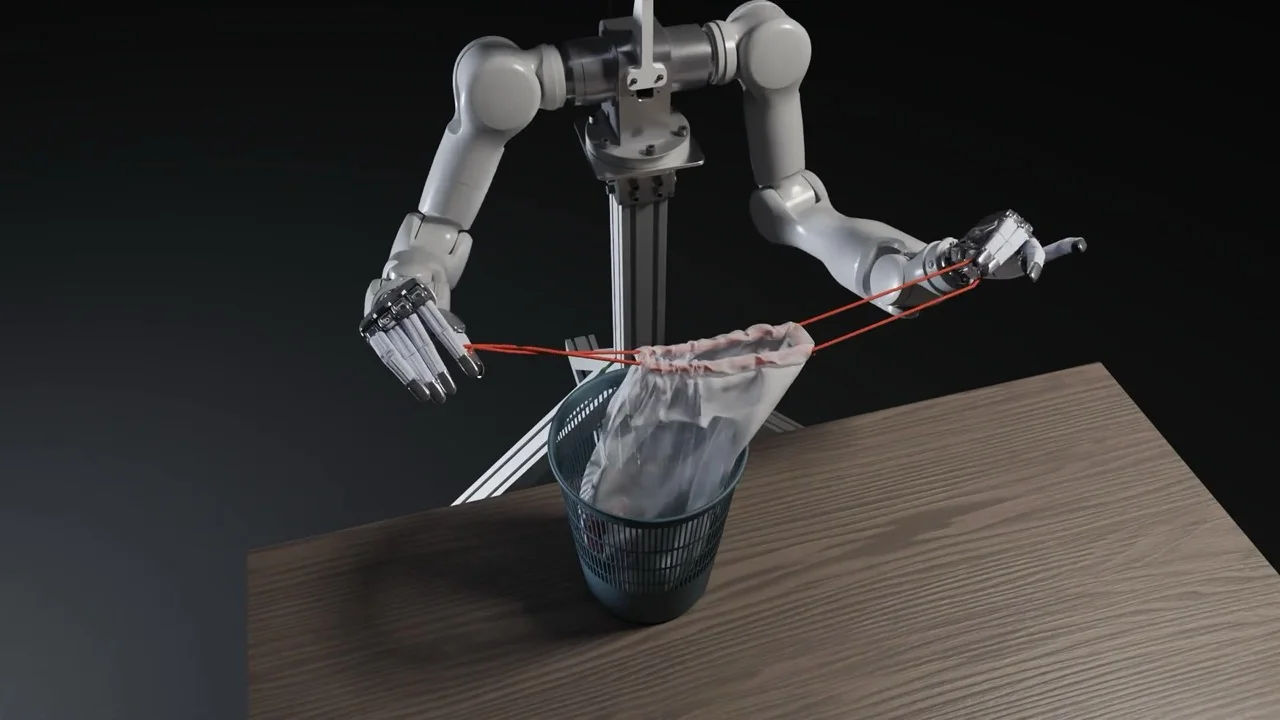
Genesis AI has released Genesis World 1.0, a high-fidelity physics simulation platform that reframes one of robotics' oldest obstacles — the "sim-to-real" gap — as something you can throw compute at. Evaluations that traditionally required nearly a week of nonstop real-world robot testing now run in roughly 30 minutes in simulation, with results that Genesis says correlate to physical-hardware performance at approximately 89%.
Why Simulation Is Robotics' Bottleneck
Robotics foundation models have lagged language models for a simple reason: data. You cannot scrape robot experience off the internet, and collecting it on physical hardware is slow, expensive and dangerous. Simulation promised a way out, but classic simulators were too inaccurate — policies that worked in sim failed on real robots, the notorious sim-to-real gap. Genesis World 1.0's bet is that if simulation gets accurate enough and fast enough, evaluation and training collapse into a compute expenditure rather than a hardware bottleneck.
Four Pieces
The platform ships as four components. The Genesis World physics engine unifies rigid-body, finite-element, material-point and particle-based physics — plus fluid coupling — in a single scene and state, so a robot manipulating a soft object in liquid is one simulation, not three stitched together. Nyx, a GPU-accelerated path-traced renderer, produces noise-free 1080p frames in under 4 milliseconds, ensuring simulated cameras see what real sensors would. Quadrants, a Python-to-GPU compiler, lowers kernel code to CUDA, ROCm, Metal, Vulkan, x86 and ARM64, carrying autodiff and GPU-graph machinery. A simulation interface ties them together.
The Competitive Picture
Genesis emerged from stealth with $105 million to build a universal robotics foundation model and a horizontal platform others build on. The 1.0 release positions the company against Nvidia's Isaac and the wave of world-model efforts from labs across the US and China, where embodied AI has become the defining frontier — Alibaba and Tencent are pouring capex into robot models, and Chinese humanoid startups have raised some of Asia's largest rounds this year.
If Genesis's 89% correlation holds up across robot morphologies and tasks, the practical effect is profound: robotics teams could iterate on policies at software speed, running thousands of virtual trials before touching physical hardware. That is the loop that made progress in language and vision explosive — and the one robotics has never had.
Newsletter
Get Lanceum in your inbox
Weekly insights on AI and technology in Asia.